Welcome to the LINK-PP Community

More Posts

The TOSA is a critical component in optical transceivers, converting electrical signals into optical signals for high-speed fiber optic communication.
Through-Hole Technology (THT) involves inserting component leads into PCB holes and soldering them, ensuring durable connections for high-reliability applications.
Through‑Hole Reflow Soldering enables simultaneous soldering of through-hole and surface-mount components in a single efficient reflow process.
Turns ratio in LAN transformers defines the winding relationship, typically 1:1, ensuring signal integrity, voltage stability, and Ethernet compliance.
Transimpedance Amplifiers (TIAs) convert sensor current to voltage using an op-amp and feedback resistor, enabling accurate signal measurement.
Explore what Thermal Interface Material (TIM) is, its key types, and why it matters in electronics and optical transceivers. Learn how TIM improves heat transfer, boosts device reliability, and supports LINK-PP modules—all explained clearly for better SEO and reader value.

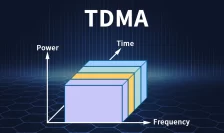
Time Division Multiple Access allows multiple users to share one channel by assigning time slots, ensuring clear calls and efficient data in modern networks.
The TCP/IP model organizes network communication into four layers, enabling secure data exchange between devices across the internet.
Discover how TSN (Time-Sensitive Networking) brings deterministic, low-latency, and reliable data delivery to Industry 4.0 and automotive Ethernet networks.
Learn what a TPU-Tensor Processing Unit is, how Google’s AI accelerator works, key TPU generations, TPU vs GPU, and its role in efficient large-scale machine learning.
Compare PROFINET vs PROFIBUS, two leading industrial communication protocols. Learn differences, advantages, applications, and how LINK-PP RJ45 connectors support automation.
Optical modules power high-speed, reliable content delivery in CDNs, enabling fast streaming, low latency, and scalable cloud and AI services.
Troubleshooting optical link issues? Identify and fix common fiber optic problems fast with step-by-step solutions for reliable network performance.

Discover how RJ45 connectors enable Ethernet communication, signal integrity, PoE power, and system reliability in modern I/O modules for industrial and automation systems.
Bandwidth vs Throughput explains the difference between maximum data capacity and actual data speed, helping you diagnose and improve network performance.
XLPPI electrical interface connects 40G QSFP+ modules to network hardware using four lanes, ensuring high-speed, reliable data transfer and compatibility.
Coherent WDM enables high-capacity, long-distance optical data transmission by using amplitude, phase, and polarization detection.
Discover how LINK-PP RJ45 Magjack improves QoS stability by enhancing signal integrity, reducing EMI, and ensuring reliable transmission for modern networks.
A complete professional guide covering all key installation, cleaning, ESD, compatibility, environmental, and safety precautions for 10G SFP+ optical modules.
Discover the differences between P2P, P2MP, MP2P, and MP2MP network architectures. Learn how LINK-PP optical transceivers enable efficient, high-speed connectivity.
Discover how DDMI—the Digital Diagnostic Monitoring Interface—gives real-time insights into optical transceivers. Learn its key metrics, benefits, and how LINK-PP modules support it.
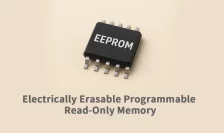
Discover how EEPROM ensures reliable configuration, superior compatibility, and lifetime flexibility in networking hardware: from RJ45 to optical modules.
Learn what crosstalk is in Ethernet, how it affects signal quality, and how LINK-PP designs help reduce interference for reliable data transmission.
FEC (Forward Error Correction) in optical communication adds redundancy to detect and correct errors, ensuring reliable, high-speed data transmission.
CPRI (Common Public Radio Interface) connects baseband units to remote radio units, enabling high-speed, low-latency communication in wireless networks.
Learn how return loss affects RJ45 MagJack performance in Ethernet applications. Explore real examples from LINK-PP 10/100Mbps to 10G RJ45 connectors.
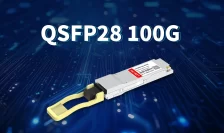
Discover the LINK-PP LQ-M85100-SR4C QSFP28 100G SR4 transceiver—ideal for short-reach 100G Ethernet over MMF. Compatible with Cisco, Arista, FS, Dell, and more.
1000BASE-SX SFP Optical Transceiver specs: 1.25Gbps, 850nm, up to 550m on multimode fiber, LC connector, DOM, and broad device compatibility explained.
Unlock flexible, high-density 100G/112G connectivity. The LQ-LW112-LR4C is a dual-rate QSFP28 10km transceiver supporting both 100GBASE-LR4 and 112GBASE-OTU4 over SMF.
Spine-Leaf Architecture in optical networks enables scalable, non-blocking connectivity and high performance for modern data centers.
LPJ26204ADNL 1x2 RJ45 Magjack delivers reliable 10/100 Ethernet, compact dual-port design, robust EMI shielding, and broad industry certifications.
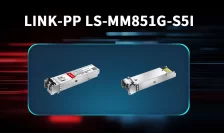
Discover how the LINK-PP LS-MM851G-S5I 1000BASE-SX transceiver offers a 100% compatible, high-performance, and cost-effective solution to replace GLC-SX-MMD.
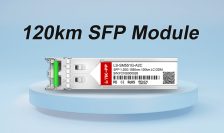
Discover LINK-PP’s LS-SM551G-A2C – a 1G 120km SFP module, high compatibility, and best-in-class value for large-scale fiber deployments.
The LINK-PP LS-SM311G-10C 1G Optical Transceiver delivers 1.25Gbps speed, 10km reach, wide compatibility, and reliable performance for fiber networks.
Explore how LINK-PP’s LS-DW4010-40I SFP+ DWDM transceiver enhances LTE fronthaul and backhaul with 10G speed, 40 km reach and industrial temperature performance.
Explore how lasers, modulators, and photodiodes form the core of optical transceivers, enabling high-speed, low-latency data transmission across global networks.