Welcome to the LINK-PP Community

More Posts

What are SFP ports on a switch? Learn how SFP ports support fiber and Ethernet connections, how they compare with RJ45 and SFP+, and which module you need.
Learn what an SFP link is, why it fails, and how to fix compatibility, cabling, and link-flap issues with practical checks and clear steps.
Learn what FCoE Fibre Channel over Ethernet is, how it works, and how it relates to optical modules, DCB, and high-performance data center networking.
Understand what CRC is, how cyclic redundancy check errors happen, how to fix them, and why CRC matters in networking, storage, and SFP modules.
What Frame Check Sequence (FCS) means, how CRC-32 detects corrupted Ethernet frames, and why FCS errors are commonly associated with cable faults, fiber issues, or optical transceiver problems.
Discover how Small and Medium-sized Businesses SMBs use SFP modules to build scalable, cost-efficient, and future-ready business networks.
Learn what hyperconverged infrastructure HCI is, how it compares with virtualization and dHCI, and when Nutanix, Sangfor, or SFP-based designs fit best.
Explain the key differences between FC SFP and Ethernet SFP modules, including compatibility, SAN vs LAN use cases, speeds, and deployment tips.
Discover Fiber Channel Transceiver use cases, SAN deployment tips, FC SFP compatibility, speeds, troubleshooting, and enterprise storage applications.
What an FC SFP module is, how it differs from Ethernet SFPs, which speeds and fiber types it supports, and how to choose the right one.
Avoid costly Fiber Installation Mistakes by spotting kinks, poor cleaning, and bad splicing. Keep your fiber network strong with these expert tips.
RDMA over Converged Ethernet enables fast, low-latency data transfers using standard Ethernet hardware, reducing CPU usage and improving network efficiency.
An IPv6 address enables secure, efficient device connections online, offering a vast address space and improved network management over IPv4.
Learn the key differences between IEEE 802.3af (PoE), 802.3at (PoE+), and 802.3bt (PoE++). Understand power levels, compatibility, and applications with LINK-PP’s PoE magnetics solutions.
Learn the difference between PSE and PD in PoE networks, how detection & classification work, and which LINK-PP PoE RJ45 products suit your WAP, camera or VoIP deployment.
Edge computing processes data near its source, enabling faster decisions, reduced latency, and efficient bandwidth use for real-time applications.
LINK-PP's fiber optic cage assemblies deliver high-density, EMI-shielded, and thermally managed solutions for 400G transceiver form factor needs.
LINK-PP optical transceivers offer full compatibility with Cisco Catalyst 9300 switches, ensuring reliable performance and cost-effective network expansion.
Power consumption optimization for optical transceivers in edge computing reduces energy use, lowers costs, and boosts network scalability and reliability.
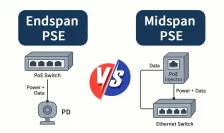
Learn the difference between Endspan and Midspan PSE in PoE networks, their roles, advantages, and how LINK-PP PoE RJ45 connectors support both types.
Discover how TSN (Time-Sensitive Networking) brings deterministic, low-latency, and reliable data delivery to Industry 4.0 and automotive Ethernet networks.
Learn what a TPU-Tensor Processing Unit is, how Google’s AI accelerator works, key TPU generations, TPU vs GPU, and its role in efficient large-scale machine learning.
SMT, or Surface Mount Technology, is a method for mounting electronic components directly onto PCB surfaces, enabling compact designs and efficient manufacturing.
A Surface-Mount Device (SMD) is a compact electronic component mounted directly on a PCB, enabling smaller, faster, and more efficient modern electronics.
What is SWDM? SWDM is a fiber technology using four short wavelengths to boost data rates and efficiency in multimode fiber networks.
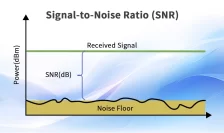
SNR, or signal-to-noise ratio, measures signal strength versus noise. High SNR means clearer audio, images, and data for better overall signal quality.
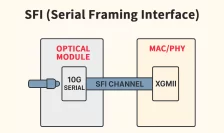
Learn how the Serial Framing Interface (SFI) enables high-speed data transmission in 10G SFP+ and 40G QSFP+ optical modules. Explore SFI channels, XGMII conversion, and module interoperability for reliable networking.
A Storage Area Network connects servers to shared storage, offering fast, reliable, and centralized data access for businesses with large data needs.
Space Division Multiplexing increases fiber network capacity by sending multiple data streams through separate paths in a single cable.
Discover what an SSD (Solid-State Drive) is, how it works, its advantages over HDDs, and its role in modern computing and enterprise storage.
Explore the hot-pluggable optical modules. how hot-swap works, its engineering value, standards involved, and considerations for deployment.
Optical modulation changes light properties to encode data, enabling high-speed, reliable transmission in fiber optic communication systems.
Discover what data bandwidth means, how it affects devices, and why it matters in digital communication. Learn how LINK-PP supports high-speed data transfer.
Discover the key electrical, mechanical, and environmental specs of integrated RJ45 connectors to select the right solution for your Ethernet applications.
The RJ45 USB connector Combo by LINK-PP, LPJU3102ABNL, merges Ethernet and USB, offering durability, EMI shielding, and LED indicators for 10/100 Base-T networks.
The LINK-PP LQD-CW400-LR4C 400G QSFP-DD LR4 Transceiver offers 10km range, 400Gbps speed, and energy efficiency, ideal for data centers and enterprise networks.
Choose the best LINK-PP SFP Transceiver by considering cable type, distance, speed, and compatibility for reliable and efficient network performance.
Optical transceivers convert electrical signals to light for fast data transfer in telecom, data centers, and 5G networks. Learn their types and uses.
Optical modules serve as the "translators" of fiber-optic networks, enabling seamless electrical-to-optical (E/O) and optical-to-electrical (O/E) conversion.

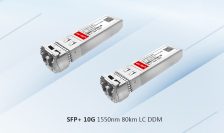
The LINK-PP 10G SFP+ Transceiver LS-SM5510-80C delivers 10.7Gbps speed, 80km range, low power use, and compatibility with top networking devices.