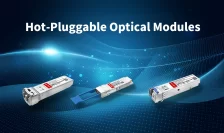
What are SFP ports on a switch? Learn how SFP ports support fiber and Ethernet connections, how they compare with RJ45 and SFP+, and which module you need.
What Frame Check Sequence (FCS) means, how CRC-32 detects corrupted Ethernet frames, and why FCS errors are commonly associated with cable faults, fiber issues, or optical transceiver problems.
Discover the LQ‑SW40‑SR4C 40GBASE‑SR module: high-speed, low-power, QSFP+ optics for multimode fibre networks. Perfect for data centres and network upgrades.
Discover how optical cross‑connect (OXC) enables all‑optical switching in DWDM/OTN networks, with LINK‑PP SFP modules ensuring seamless integration and superior performance.
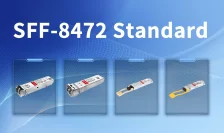
SFF-8472 standard Explained, the industry specification for DDM in SFP optical transceivers. Discover how it enhances network reliability and maintenance.
Learn how VCSEL, FP, DFB, and EML lasers differ in optical modules. Explore their key traits, common uses, and how LINK‑PP incorporates them in transceivers.
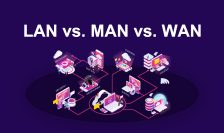
Explore the differences between LAN, MAN, and WAN networks, their technologies, typical applications, and why LINK‑PP components are ideal for each deployment.
Discover what a Metropolitan Area Network (MAN) is, how it bridges LAN and WAN, and its core technologies and applications. | LINK‑PP Comprehensive Guide.
Learn what signal distortion means in network hardware. Understand types, causes, effects, and discover how LINK-PP’s RJ45, LAN transformer, and optical modules control distortion for reliable data centers.
Learn what Network Processing Units (NPUs) are, how they work, and why NPUs are essential in routers, switches, and 5G networks. Explore benefits, architecture, and key applications.
The Domain Name System (DNS) converts domain names into IP addresses, enabling devices to connect to websites and services quickly and reliably online.
Explore how distributed control systems (DCS) empower industrial automation with reliable control loops, real-time monitoring, and enhanced process efficiency — key for modern plants.
An Optical Channel Monitor measures channel power, wavelength, and OSNR in fiber optic networks, ensuring reliable performance and fast problem detection.
Learn what Remote Terminal Units (RTUs) are, how they work in SCADA systems, key protocols (Modbus, DNP3, IEC), cybersecurity practices, and industrial Ethernet hardware considerations.
Virtual Routing and Forwarding (VRF) enables multiple private routing tables on one device, improving network security, segmentation, and traffic management.
Discover how TSN (Time-Sensitive Networking) brings deterministic, low-latency, and reliable data delivery to Industry 4.0 and automotive Ethernet networks.
User Datagram Protocol enables fast, connectionless data transfer for real-time apps like streaming, gaming, and DNS, prioritizing speed over reliability.
SSL encrypts data between your browser and websites, ensuring privacy and security. SSL certificates verify site identity and protect sensitive information.
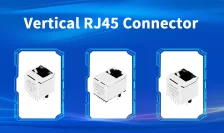
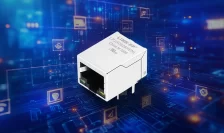
Discover LINK-PP’s vertical RJ45 connectors. Save board space with top-entry designs offer integrated magnetics, shielding, and reliable Ethernet performance.
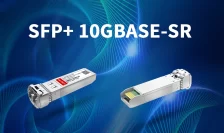
Explore the LINK-PP LS-MM8510-S3C SFP+ 850nm 10GBASE-SR optical transceiver. Up to 300m reach on MMF with low power consumption and full compatibility.
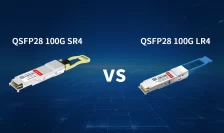
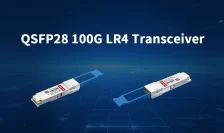
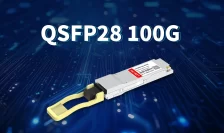
Discover the LINK-PP LQ-M85100-SR4C QSFP28 100G SR4 transceiver—ideal for short-reach 100G Ethernet over MMF. Compatible with Cisco, Arista, FS, Dell, and more.
Discover what data bandwidth means, how it affects devices, and why it matters in digital communication. Learn how LINK-PP supports high-speed data transfer.
The LPJG0926HENL RJ45 connector with integrated magnetics offers PoE+ support, space efficiency, and compliance for high-performance Ethernet applications.
Subscribe to LINK-PP
newsletter
Don’t miss anything. Get all the latest posts delivered straight to your inbox.