Welcome to the LINK-PP Community

More Posts

What are SFP ports on a switch? Learn how SFP ports support fiber and Ethernet connections, how they compare with RJ45 and SFP+, and which module you need.
Learn what an SFP link is, why it fails, and how to fix compatibility, cabling, and link-flap issues with practical checks and clear steps.
Optical transceivers in UAVs enable high-speed, secure, and low-latency drone communication for real-time video, telemetry, and mission-critical data.
Explore the technology behind 400 G QSFP‑DD transceivers, including form factor, modulation, optical lanes, and thermal design.
Understand hot‑pluggable optical modules insertion cycle limits, and learn care tips—including ESD-safe handling, dust prevention, and heat management.
Understand what CRC is, how cyclic redundancy check errors happen, how to fix them, and why CRC matters in networking, storage, and SFP modules.
What Frame Check Sequence (FCS) means, how CRC-32 detects corrupted Ethernet frames, and why FCS errors are commonly associated with cable faults, fiber issues, or optical transceiver problems.
Discover the LQ‑SW40‑SR4C 40GBASE‑SR module: high-speed, low-power, QSFP+ optics for multimode fibre networks. Perfect for data centres and network upgrades.
Discover how optical cross‑connect (OXC) enables all‑optical switching in DWDM/OTN networks, with LINK‑PP SFP modules ensuring seamless integration and superior performance.
Discover how EML works in optical modules, why it’s vital for high‑speed, long‑distance links, and how LINK‑PP brings EML‑based optical transceivers.
Learn how to remove an SFP module from a switch safely and correctly. Step-by-step guide covering hot swap, latch types, stuck modules, and ESD protection.
Learn how to choose the right SFP module based on compatibility, speed, fiber type, wavelength, and distance. Practical guide for engineers and IT buyers.
A complete guide to SFP in networking, covering function, working principle, module types, deployment scenarios, compatibility, and technical standards for modern fiber networks.
Discover what SFP stands for in networking, its full meaning, technical standards, uses, and differences from SFP+ and GBIC in this expert guide.
Comprehensive BiDi SFP guide: learn single-fiber bidirectional transceivers, wavelength pairing, link-budget calculation, compatibility, and deployment best practices.
Authoritative SFP wavelength guide: compare 850nm, 1310nm, 1550nm applications, link-budget implications, multimode vs single-mode selection, interoperability, and checklist.
Comprehensive SFP compatibility guide covering data rate matching, wavelength selection, power budget calculation, EEPROM coding, firmware validation, and vendor locking.
SFP+ Types overview: Compare optical, copper, and direct attach modules, their features, distances, and compatibility for optimal network performance.
What Is QSFP-DD? QSFP-DD enables high-speed Ethernet with double density, backward compatibility, and up to 800G bandwidth for modern data centers.
Understanding polarity in MTP/MPO systems ensures correct signal flow, prevents data errors, and maintains reliable network performance.
What is LWDM? LWDM is a LAN WDM technology using multiple wavelengths to boost bandwidth and efficiency in local area networks and data centers.
Insertion loss in RJ45 connectors weakens signal strength, impacting network reliability. Learn how to minimize insertion loss for optimal performance.
A Surface-Mount Device (SMD) is a compact electronic component mounted directly on a PCB, enabling smaller, faster, and more efficient modern electronics.
Learn what a DFB laser (Distributed Feedback Laser) is, its working principle, structure, and key differences from FP and VCSEL lasers.
An Erbium-Doped Fiber Amplifier boosts optical signals in fiber networks, enabling long-distance communication with minimal loss and high efficiency.
CPRI (Common Public Radio Interface) connects baseband units to remote radio units, enabling high-speed, low-latency communication in wireless networks.
EMC Electromagnetic Compatibility ensures devices work safely and reliably in shared environments by minimizing interference and meeting compliance standards.
Electromagnetic interference (EMI) disrupts electronic devices by introducing unwanted electromagnetic energy, causing malfunctions and performance issues.
Through-Hole Technology (THT) involves inserting component leads into PCB holes and soldering them, ensuring durable connections for high-reliability applications.
SMT, or Surface Mount Technology, is a method for mounting electronic components directly onto PCB surfaces, enabling compact designs and efficient manufacturing.
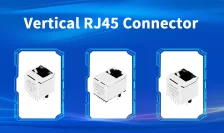
Discover LINK-PP’s vertical RJ45 connectors. Save board space with top-entry designs offer integrated magnetics, shielding, and reliable Ethernet performance.
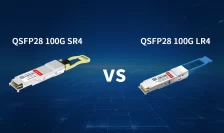
Compare QSFP28 100G SR4 vs LR4 to choose the right 100G transceiver for your network based on distance, fiber type, connectors, and budget.
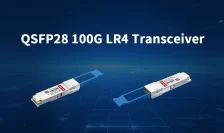
A 100G LR4 transceiver enables 100Gbps data transfer up to 10km using single-mode fiber, ideal for high-speed, long-distance network connections.
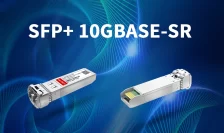
Explore the LINK-PP LS-MM8510-S3C SFP+ 850nm 10GBASE-SR optical transceiver. Up to 300m reach on MMF with low power consumption and full compatibility.
Choose the right 10G SFP+ transceiver by comparing compatibility, speed, media type, distance, and cost for reliable network upgrades.
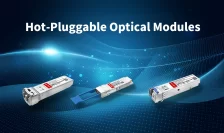
Explore the hot-pluggable optical modules. how hot-swap works, its engineering value, standards involved, and considerations for deployment.
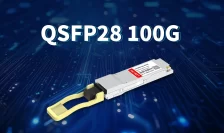
Discover the LINK-PP LQ-M85100-SR4C QSFP28 100G SR4 transceiver—ideal for short-reach 100G Ethernet over MMF. Compatible with Cisco, Arista, FS, Dell, and more.
Optical modulation changes light properties to encode data, enabling high-speed, reliable transmission in fiber optic communication systems.
Discover what data bandwidth means, how it affects devices, and why it matters in digital communication. Learn how LINK-PP supports high-speed data transfer.
The LPJG0926HENL RJ45 connector with integrated magnetics offers PoE+ support, space efficiency, and compliance for high-performance Ethernet applications.

Add Your Heading Text Here