Turns ratio in LAN transformers defines the winding relationship, typically 1:1, ensuring signal integrity, voltage stability, and Ethernet compliance.
SMT, or Surface Mount Technology, is a method for mounting electronic components directly onto PCB surfaces, enabling compact designs and efficient manufacturing.
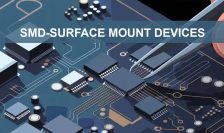
A Surface-Mount Device (SMD) is a compact electronic component mounted directly on a PCB, enabling smaller, faster, and more efficient modern electronics.
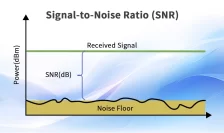
SNR, or signal-to-noise ratio, measures signal strength versus noise. High SNR means clearer audio, images, and data for better overall signal quality.
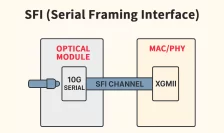
Learn how the Serial Framing Interface (SFI) enables high-speed data transmission in 10G SFP+ and 40G QSFP+ optical modules. Explore SFI channels, XGMII conversion, and module interoperability for reliable networking.
10G PON delivers up to 10 Gbps speeds using advanced fiber optics, ensuring reliable, high-speed internet for homes, businesses, and modern applications.
Filter FWDM combines or separates light wavelengths in optical networks, optimizing bandwidth, reducing costs, and enabling high-speed data transmission.
Optical encryption secures high-speed networks by encrypting raw optical signals, ensuring low latency, robust data protection, and future-ready security.
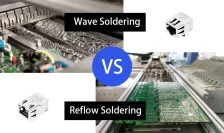
Wave Soldering vs. Reflow Soldering: Compare processes, applications, costs, and best uses for PCB assembly to choose the right method for your project.
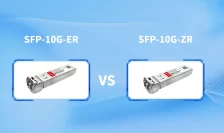
SFP-10G-ER vs SFP-10G-ZR: Compare max distance, specs, and best uses to choose the right 10G SFP+ module for your network's range and application needs.
Explain reflow vs. wave soldering for RJ45 connectors. Discover when to use SMT or THT Mount and how soldering Methods affects performance and reliability.
Understand TDCEQ, the critical PAM4 transmitter quality metric for modern optical modules. Learn how tdecq measures vertical eye closure and affects 50/100/400g module performance and compliance.
exploring cloud migration and its benefits, strategies, best practices, also delve into the essential hardware, like optical modules, that make it all possible.
Learn what the EtherCAT Slave Controller (ESC) is and how it processes real-time frames, manages FMMU mapping, and enables high-speed industrial automation.
Learn what FMMU (Fieldbus Memory Management Unit) is and how it enables real-time EtherCAT communication through efficient memory mapping and on-the-fly data processing.
Learn what the PCS (Physical Coding Sublayer) is, how it enables reliable Ethernet transmission, and why it matters for high-speed optical transceivers and network design.
Physical Medium Dependent (PMD) defines the optical and electrical rules of a PHY—wavelength, power, reach, and test points. Understand PMD specs and how they guide transceiver selection.
Unlock flexible, high-density 100G/112G connectivity. The LQ-LW112-LR4C is a dual-rate QSFP28 10km transceiver supporting both 100GBASE-LR4 and 112GBASE-OTU4 over SMF.
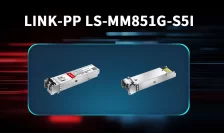
Discover how the LINK-PP LS-MM851G-S5I 1000BASE-SX transceiver offers a 100% compatible, high-performance, and cost-effective solution to replace GLC-SX-MMD.
Explore how LINK-PP’s LS-DW4010-40I SFP+ DWDM transceiver enhances LTE fronthaul and backhaul with 10G speed, 40 km reach and industrial temperature performance.
Explore how lasers, modulators, and photodiodes form the core of optical transceivers, enabling high-speed, low-latency data transmission across global networks.