Welcome to the LINK-PP Community

More Posts

The TOSA is a critical component in optical transceivers, converting electrical signals into optical signals for high-speed fiber optic communication.
Through-Hole Technology (THT) involves inserting component leads into PCB holes and soldering them, ensuring durable connections for high-reliability applications.
Through‑Hole Reflow Soldering enables simultaneous soldering of through-hole and surface-mount components in a single efficient reflow process.
Turns ratio in LAN transformers defines the winding relationship, typically 1:1, ensuring signal integrity, voltage stability, and Ethernet compliance.
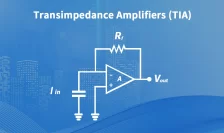
Transimpedance Amplifiers (TIAs) convert sensor current to voltage using an op-amp and feedback resistor, enabling accurate signal measurement.
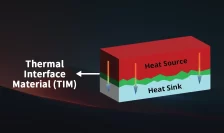
Explore what Thermal Interface Material (TIM) is, its key types, and why it matters in electronics and optical transceivers. Learn how TIM improves heat transfer, boosts device reliability, and supports LINK-PP modules—all explained clearly for better SEO and reader value.

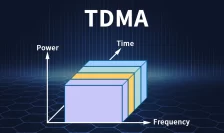
Time Division Multiple Access allows multiple users to share one channel by assigning time slots, ensuring clear calls and efficient data in modern networks.
The TCP/IP model organizes network communication into four layers, enabling secure data exchange between devices across the internet.
Discover how TSN (Time-Sensitive Networking) brings deterministic, low-latency, and reliable data delivery to Industry 4.0 and automotive Ethernet networks.
Learn what a TPU-Tensor Processing Unit is, how Google’s AI accelerator works, key TPU generations, TPU vs GPU, and its role in efficient large-scale machine learning.
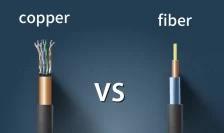
Fiber optic cable offers faster speeds, longer distances, and better reliability than copper cable, making it ideal for high-performance internet and networks.
CWDM vs DWDM: Cost-effective 8-channel metro optics vs high-density 96+ channel long-haul systems. Choose LINK-PP optical transceivers for both WDM solutions.
Cooperation Between LINK-PP and Vietnam Telecom in 2025 boosts Vietnam’s telecom with advanced optical modules, enhancing speed, reliability, and scalability.
Compare PC vs UPC vs APC fiber connectors to choose the best type for your network. Understand differences in return loss, insertion loss, and applications.
DWDM tunable optical modules offer flexibility, cost savings, and scalability by dynamically adjusting wavelengths for modern optical networks.
Understand the key parameters of optical modules, including transmission rate, distance, wavelength, and fiber compatibility, for better network performance.

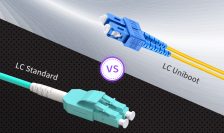
Compare uniboot LC and standard LC cables for space-saving, polarity management, and cost. Discover which fits your network's needs and setup best.

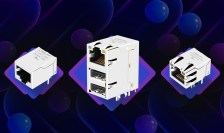
LINK-PP RJ45 part numbers define series, type, schematic, mechanical design, LED colors, and RoHS compliance for easy product identification.
Industrial Grade 100G optical transceivers ensure high-speed, reliable data transmission in harsh environments, making them vital for modern network infrastructure.
AON vs PON: Compare active and passive optical networks. Learn how AON offers high bandwidth and long-distance coverage, while PON is cost-effective for FTTH.
Learn what an Intrusion Prevention System (IPS) is, how it works, key types, and deployment best practices. Enhance your IPS network with LINK-PP Ethernet components.
Discover what an inductor is, how it functions in electronic circuits, its types, and real-world applications. Learn about this essential component in modern electronics.
Discover what Integrated Circuits (ICs) are, how they work, and their role in electronics. Learn about IC types, applications, and how LINK-PP networking products complement ICs.
An ISP is the company that delivers internet access to individuals and businesses. Discover how ISPs enable connectivity and how LINK-PP's Magnetics support their infrastructure.
Discover what IEEE means for network hardware, key standards like IEEE 802.3, and how LINK-PP delivers certified, reliable Ethernet solutions for B2B procurement.
Insertion loss in RJ45 connectors weakens signal strength, impacting network reliability. Learn how to minimize insertion loss for optimal performance.
Intersymbol interference (ISI) in digital communication occurs when overlapping signals cause bit errors, reducing data reliability and signal clarity.
Fiber Bragg Grating enables precise strain and temperature sensing, offering reliable monitoring for structures, machines, and harsh environments.
A power supply unit converts AC to DC and delivers stable power, protecting your computer and ensuring reliable performance for all components.
Learn what an NPU (Neural Processing Unit) is, how it works, and why NPUs are essential for AI workloads and edge devices. Compare NPU vs CPU vs GPU and explore real-world use cases.
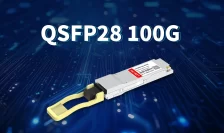
Discover the LINK-PP LQ-M85100-SR4C QSFP28 100G SR4 transceiver—ideal for short-reach 100G Ethernet over MMF. Compatible with Cisco, Arista, FS, Dell, and more.
1000BASE-SX SFP Optical Transceiver specs: 1.25Gbps, 850nm, up to 550m on multimode fiber, LC connector, DOM, and broad device compatibility explained.
Unlock flexible, high-density 100G/112G connectivity. The LQ-LW112-LR4C is a dual-rate QSFP28 10km transceiver supporting both 100GBASE-LR4 and 112GBASE-OTU4 over SMF.
Spine-Leaf Architecture in optical networks enables scalable, non-blocking connectivity and high performance for modern data centers.
LPJ26204ADNL 1x2 RJ45 Magjack delivers reliable 10/100 Ethernet, compact dual-port design, robust EMI shielding, and broad industry certifications.
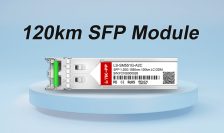
Discover LINK-PP’s LS-SM551G-A2C – a 1G 120km SFP module, high compatibility, and best-in-class value for large-scale fiber deployments.
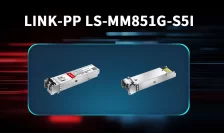
Discover how the LINK-PP LS-MM851G-S5I 1000BASE-SX transceiver offers a 100% compatible, high-performance, and cost-effective solution to replace GLC-SX-MMD.
The LINK-PP LS-SM311G-10C 1G Optical Transceiver delivers 1.25Gbps speed, 10km reach, wide compatibility, and reliable performance for fiber networks.
Explore how LINK-PP’s LS-DW4010-40I SFP+ DWDM transceiver enhances LTE fronthaul and backhaul with 10G speed, 40 km reach and industrial temperature performance.
Explore how lasers, modulators, and photodiodes form the core of optical transceivers, enabling high-speed, low-latency data transmission across global networks.