Welcome to the LINK-PP Community

More Posts

Through‑Hole Reflow Soldering enables simultaneous soldering of through-hole and surface-mount components in a single efficient reflow process.
What are SFP ports on a switch? Learn how SFP ports support fiber and Ethernet connections, how they compare with RJ45 and SFP+, and which module you need.
Learn what an SFP link is, why it fails, and how to fix compatibility, cabling, and link-flap issues with practical checks and clear steps.
Optical transceivers in UAVs enable high-speed, secure, and low-latency drone communication for real-time video, telemetry, and mission-critical data.
Explore the technology behind 400 G QSFP‑DD transceivers, including form factor, modulation, optical lanes, and thermal design.
Understand hot‑pluggable optical modules insertion cycle limits, and learn care tips—including ESD-safe handling, dust prevention, and heat management.
Understand what CRC is, how cyclic redundancy check errors happen, how to fix them, and why CRC matters in networking, storage, and SFP modules.
What Frame Check Sequence (FCS) means, how CRC-32 detects corrupted Ethernet frames, and why FCS errors are commonly associated with cable faults, fiber issues, or optical transceiver problems.
Discover the LQ‑SW40‑SR4C 40GBASE‑SR module: high-speed, low-power, QSFP+ optics for multimode fibre networks. Perfect for data centres and network upgrades.
Discover how optical cross‑connect (OXC) enables all‑optical switching in DWDM/OTN networks, with LINK‑PP SFP modules ensuring seamless integration and superior performance.
MUX and DEMUX streamline data transmission by combining and splitting signals, reducing cables, and enhancing network efficiency and reliability.
Learn how optical pulses transmit high-speed data in fiber networks. Explore principles, applications, and why LINK-PP optical transceivers deliver cleaner, more reliable pulses.
Data center virtualization uses software to create virtual servers, storage, and networks, improving efficiency, reducing costs, and boosting flexibility.
Compare Fiber Optic Splitter and coupler functions, signal loss, and best uses to choose the right device for efficient modern network distribution.
A cloud managed network lets you control devices remotely via a web dashboard, offering easy management, automatic updates, and strong security.
Unlock high-speed industrial automation with EtherCAT. Learn how EtherCAT achieves sub-microsecond synchronization, its principles, and why it is critical for modern motion control and smart factories.
Learn how PCS, PMA, and PMD work together inside the Ethernet PHY, enabling reliable high-speed data transmission across fiber and copper networks.
Open source gives control over software code, while open networking lets you mix hardware and software from multiple vendors for flexible networks.
Open networking enables flexible, vendor-neutral networks by separating hardware and software, offering more control, choice, and cost efficiency.
A fiber optic coupler splits or combines light signals in optical networks, improving data flow, reliability, and network flexibility for various applications.
Learn what a Fiber Optical Light Source is, how it works, its types, and how to choose the right one for accurate fiber testing and network performance.
Learn what an OPM optical power meter is, how it measures optical power and loss, and why it matters for optical modules, SFP, and QSFP testing.
Learn what a VOA variable optical attenuator is, how it works, and why it is critical for optical modules like SFP and QSFP in fiber networks.
Learn what a fixed optical attenuator is, how it works, and why it is used to control optical power, protect receivers, and support optical modules.
Understand what a Digital Communication Analyzer (DCA) is, how it works, and why it is essential for optical module testing, eye diagrams, and signal integrity.
Direct Memory Access (DMA) lets hardware devices transfer data to or from memory without CPU involvement, boosting speed and system efficiency.
Discover the benefits of copper-based interconnects for data centers. Learn how they reduce costs, improve connectivity, and support network efficiency.
Access control lists define who can access or modify files and networks, improving security by setting clear permissions for users and devices.
Border Gateway Protocol (BGP) manages how data travels between networks, ensuring efficient, reliable routing across the global Internet.
A power distribution unit ensures safe, efficient power delivery to data center equipment, preventing overloads and supporting reliable IT operations.
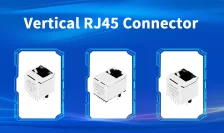
Discover LINK-PP’s vertical RJ45 connectors. Save board space with top-entry designs offer integrated magnetics, shielding, and reliable Ethernet performance.
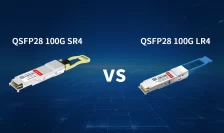
Compare QSFP28 100G SR4 vs LR4 to choose the right 100G transceiver for your network based on distance, fiber type, connectors, and budget.
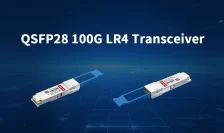
A 100G LR4 transceiver enables 100Gbps data transfer up to 10km using single-mode fiber, ideal for high-speed, long-distance network connections.
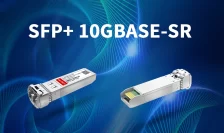
Explore the LINK-PP LS-MM8510-S3C SFP+ 850nm 10GBASE-SR optical transceiver. Up to 300m reach on MMF with low power consumption and full compatibility.
Choose the right 10G SFP+ transceiver by comparing compatibility, speed, media type, distance, and cost for reliable network upgrades.
Explore the hot-pluggable optical modules. how hot-swap works, its engineering value, standards involved, and considerations for deployment.
Discover the LINK-PP LQ-M85100-SR4C QSFP28 100G SR4 transceiver—ideal for short-reach 100G Ethernet over MMF. Compatible with Cisco, Arista, FS, Dell, and more.
Optical modulation changes light properties to encode data, enabling high-speed, reliable transmission in fiber optic communication systems.
Discover what data bandwidth means, how it affects devices, and why it matters in digital communication. Learn how LINK-PP supports high-speed data transfer.
The LPJG0926HENL RJ45 connector with integrated magnetics offers PoE+ support, space efficiency, and compliance for high-performance Ethernet applications.