Showing results for: ""

Topics
Discover what a MoR switch (Middle-of-Rack switch) is, how MoR compares to ToR/EoR, and which SFP+/SFP28/QSFP modules work best — a practical guide for datacenter design.
Wi-Fi technology enables wireless internet access for devices like phones, laptops, and tablets, using radio waves for fast, cable-free connectivity.
Learn what a ToR (Top-of-Rack) switch is, how ToR architecture works, and why it’s the preferred networking model in modern data centers. Includes benefits, use cases, and compatible optical transceiver solutions from LINK-PP.
Discover the Decision Feedback Equalizer (DFE), the nonlinear technique essential for minimizing ISI. Learn how DFE improves bit BER in optics transceivers and long-haul data links.
Learn what FFE (Feed-Forward Equalizer) is, how transmit equalization works, and why FFE is essential for high-speed optical modules and SerDes signal integrity.
1000BASE-SX SFP Optical Transceiver specs: 1.25Gbps, 850nm, up to 550m on multimode fiber, LC connector, DOM, and broad device compatibility explained.
WLAN covers all wireless local area networks, while Wi-Fi is a specific WLAN type using set standards for fast, reliable connections.
HTTP vs HTTPS: HTTPS encrypts data for secure transmission, while HTTP leaves information exposed. Choose HTTPS for privacy, trust, and compliance.
A wireless LAN (WLAN) connects devices like laptops and phones using radio waves, enabling flexible, cable-free networking in homes, schools, or offices.
Compare 100G LR4, CWDM4, and PSM4 to find the best 100G transceiver for your network based on distance, cost, and cabling requirements.
OTU4 vs 100GE: Compare speed, reliability, and use cases to choose the best high-speed protocol for your network’s needs and future growth.
Explore the critical challenges of optical module housings in the 400G/800G era: heat management, material limits, signal integrity, and how innovation tackles them.
Discover the role of optical module housings in data centers & 5G. Learn about materials like ceramics & alloys, thermal challenges, and explore Link-PP's optical transceivers.
Attenuation in optical transceivers weakens signals. Manage loss by checking cables, cleaning connectors, and using proper fiber tools.
Discover how optical modules power backbone networks: high-speed data, reliability, LINK-PP advantages, and procurement tips for data centers and carriers.
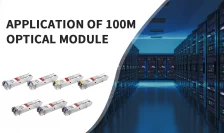
100M Optical Module enables fast, reliable connections for offices, factories, security, and telecom networks, supporting efficient short-distance data transfer.
Dispersion in optical transceiver affects signal clarity and data reliability. Learn how to manage dispersion for optimal network performance.
2.5G optical modules boost network speed, simplify upgrades, and cut costs with easy installation and broad compatibility for modern networks.
SMF Optical transceiver offers long-distance, high-speed links, while MMF suits short, cost-effective runs. Choose based on your network’s needs.
Choose the right 100M optical transceiver by checking compatibility, fiber type, wavelength, distance, data rate, connector, and reliability.
Through‑Hole Reflow Soldering enables simultaneous soldering of through-hole and surface-mount components in a single efficient reflow process.
What Frame Check Sequence (FCS) means, how CRC-32 detects corrupted Ethernet frames, and why FCS errors are commonly associated with cable faults, fiber issues, or optical transceiver problems.
Understand what CRC is, how cyclic redundancy check errors happen, how to fix them, and why CRC matters in networking, storage, and SFP modules.
Discover how optical cross‑connect (OXC) enables all‑optical switching in DWDM/OTN networks, with LINK‑PP SFP modules ensuring seamless integration and superior performance.
Discover how EML works in optical modules, why it’s vital for high‑speed, long‑distance links, and how LINK‑PP brings EML‑based optical transceivers.
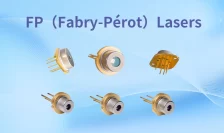
Explore how FP (Fabry‑Perot) laser diodes work in optical transceiver modules, their technical traits, typical use in low‑rate short‑distance links.
Learn what FCoE Fibre Channel over Ethernet is, how it works, and how it relates to optical modules, DCB, and high-performance data center networking.
Learn what Dispersion Compensation Fiber (DCF) is, how it reduces chromatic dispersion, where it is used, and why it matters in modern optical networks.
Learn what OEO means in optical communication, how optical-electrical-optical regeneration works, and when it is used in DWDM networks and optical links. Keywords:
Learn what a dispersion compensation module is, how DCM works in DWDM networks, its role in long-haul fiber links, and when it is still used today.
Discover the LQ‑SW40‑SR4C 40GBASE‑SR module: high-speed, low-power, QSFP+ optics for multimode fibre networks. Perfect for data centres and network upgrades.
Learn what hyperconverged infrastructure HCI is, how it compares with virtualization and dHCI, and when Nutanix, Sangfor, or SFP-based designs fit best.

What an FC SFP module is, how it differs from Ethernet SFPs, which speeds and fiber types it supports, and how to choose the right one.
Learn the real difference between 1000base-lh and 1000base-lx, including wavelength, fiber compatibility, Cisco naming, and when to use each.
Learn what a Gigabit SFP transceiver is, compare 1000BASE-SX, LX, and T options, and solve common compatibility and setup issues with confidence.
Learn what a 10/100/1000BASE-T SFP is, how RJ45 copper SFP modules work, compatibility issues, heat concerns, and best use cases in networks.
Compare CFP4 vs. QSFP28 by size, power, density, and deployment fit. Learn which 100G module is better for data centers, telecom, and upgrades.


Explore the Netgear AGM731F datasheet with specs, LC connector, OM1/OM3/OM4 distances, compatibility, power use, and operating limits.
Learn QSFP+ 40GBASE-LR4 specs, distance limits, compatibility tips, and buying advice. Avoid common deployment issues with this expert guide.
Learn what 40GBASE-ER4 is, how far it reaches over duplex single-mode fiber, what it supports, and how to choose the right QSFP+ optic.

Add Your Heading Text Here