Discover what HDI PCB (High-Density Interconnect) is, its advantages, manufacturing techniques, and key applications in modern electronics and 5G devices.
What is Optical Line Terminal (OLT)? An OLT is the main device in fiber networks, converting signals and managing data for fast, stable internet connections.
Discover what FWA is, how it delivers broadband using 4G/5G wireless networks, and why it matters for connectivity. Learn its benefits, challenges, and how LINK-PP SFP modules support reliable FWA deployments.
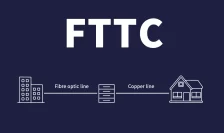
Learn what FTTC (Fiber to the Curb) is, how it works, its pros and cons, and how it compares with FTTH and DSL. Discover applications, equipment needs, and future trends in broadband access.
Network Filter explained: what LAN filters and Ethernet common-mode chokes do, why they matter for EMI, isolation, and PoE, and how to choose the right RJ45 magnetics.
Learn what IEEE 802.3af (PoE) means, how it delivers up to 15.4W of power through Ethernet cables, and its key applications. Discover LINK-PP PoE RJ45 Magnetics for stable power delivery.
A fiber optic cable uses thin glass or plastic fibers to transmit data as light pulses, enabling fast, clear, and reliable communication over long distances.
Discover how a 1550 nm optical transceiver converts electrical signals into light for long-distance fiber links. Learn its benefits, tech specs, and LINK-PP models.
Explore detailed insights into FTTx deployments including FTTH, FTTB, FTTC, and more. Learn how LINK-PP’s optical modules support reliable fiber networks.
Discover what HDI PCB (High-Density Interconnect) is, its advantages, manufacturing techniques, and key applications in modern electronics and 5G devices.
Turns ratio in LAN transformers defines the winding relationship, typically 1:1, ensuring signal integrity, voltage stability, and Ethernet compliance.
Discover how TSN (Time-Sensitive Networking) brings deterministic, low-latency, and reliable data delivery to Industry 4.0 and automotive Ethernet networks.
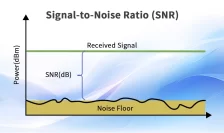
SNR, or signal-to-noise ratio, measures signal strength versus noise. High SNR means clearer audio, images, and data for better overall signal quality.
Learn what hyperconverged infrastructure HCI is, how it compares with virtualization and dHCI, and when Nutanix, Sangfor, or SFP-based designs fit best.
Discover what data bandwidth means, how it affects devices, and why it matters in digital communication. Learn how LINK-PP supports high-speed data transfer.
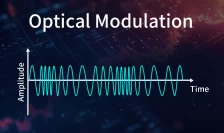
Optical transceiver modules convert electrical signals to light, enabling high-speed data transmission in fiber optic networks for modern communication.
Learn what LX SFP (1000BASE-LX) modules are, how they differ from LR/LH/SX, and practical tips for compatibility, multimode use, and real-world deployment.
Explain what a 100km SFP transceiver is, how ER and ZR differ, required wavelength, optical budget calculation, and whether amplification is needed for long-haul fiber links.
Subscribe to LINK-PP
newsletter
Don’t miss anything. Get all the latest posts delivered straight to your inbox.