Blog
Blog Type
Product
Topic
Blog Type
Product
Topic
Knowledge Center
Industry
Product
Product
Glossary
Category
100G Optical Transceivers
Topics
106
Learn what FCoE Fibre Channel over Ethernet is, how it works, and how it relates to optical modules, DCB, and high-performance data center networking.
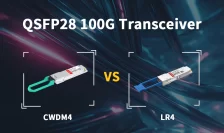
Compare 100g cwdm4 lr4 modules for single-mode fiber: CWDM4 suits short to medium links, LR4 excels at long-distance, high-reliability connections.
LINK-PP 100G transceivers deliver high-speed connectivity, energy efficiency, and seamless integration, making them ideal for modern networks and data centers.
Understand 100G optical transceiver form factors like QSFP28, CFP, CFP2, CFP4 and CXP. Learn how they optimize network performance and ensure compatibility.
LINK-PP 100G SFP-DD LR optical module enables high-speed, long-distance connections.
100G SFP-DD transceivers boost high-density networks with fast 100Gbps speeds, compact design, energy efficiency, and long-distance data transmission up to 40km.
Industrial Grade 100G optical transceivers ensure high-speed, reliable data transmission in harsh environments, making them vital for modern network infrastructure.
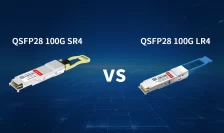
Compare QSFP28 100G SR4 vs LR4 to choose the right 100G transceiver for your network based on distance, fiber type, connectors, and budget.
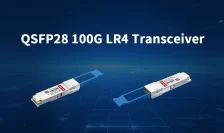
A 100G LR4 transceiver enables 100Gbps data transfer up to 10km using single-mode fiber, ideal for high-speed, long-distance network connections.
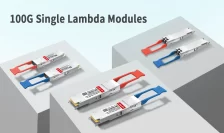
100G Single Lambda module deliver faster speeds, lower power use, and easier upgrades for data centers and telecom networks.
70
A wavelength converter in 2025 rapidly transforms light’s wavelength, enabling precise frequency, energy, and wavenumber calculations for devices.
Pluggable optics enable flexible, cost-effective network upgrades and high-speed connections, with linear pluggable optics boosting AI and data center performance.
On-Board Optics boosts data speed, power efficiency, and channel density for data centers, supercomputers, and advanced network systems.
Pluggable optics offer flexible upgrades, while on-board optics provide higher speed and integration. Compare both for your data center needs.
Aging and burn-in tests ensure optical transceiver reliability by detecting early failures, improving performance, and extending module lifespan.
Open optics and disaggregation in data center networks cut costs, boost flexibility, and improve performance while reducing vendor lock-in and energy use.
Learn what IEEE 802.3bm is and how it defines the key PHY interfaces for 40G and 100G Ethernet. Explore SR4, LR4, CR4 technologies and why this standard powers modern data centers.
A fiber optic coupler splits or combines light signals in optical networks, improving data flow, reliability, and network flexibility for various applications.
Open networking enables flexible, vendor-neutral networks by separating hardware and software, offering more control, choice, and cost efficiency.
Open source gives control over software code, while open networking lets you mix hardware and software from multiple vendors for flexible networks.
28
Learn what network latency is, what causes it, and actionable strategies to reduce it. Discover how high-performance optics from brands like LINK-PP can help.
Network congestion slows internet speeds and causes dropped connections. Learn how to identify, fix, and prevent network congestion for smoother online use.
exploring cloud migration and its benefits, strategies, best practices, also delve into the essential hardware, like optical modules, that make it all possible.
SVI in networking lets you assign IP addresses to VLANs, enabling inter-VLAN routing and efficient Layer 3 switch management for your network.
HTTP over SSL encrypts your data, ensuring secure, private communication and protecting sensitive information from hackers during web browsing.
FTP over SSL (FTPS) secures file transfers by encrypting data with SSL/TLS, protecting sensitive information from unauthorized access during transit.
SCP (Secure Copy) enables secure, encrypted file transfers between computers using SSH. See how to use SCP, its features, and best practices.
A wireless LAN (WLAN) connects devices like laptops and phones using radio waves, enabling flexible, cable-free networking in homes, schools, or offices.
8
LINK-PP 100G transceivers deliver high-speed connectivity, energy efficiency, and seamless integration, making them ideal for modern networks and data centers.
Compare QSFP28 100G SR4 vs LR4 to choose the right 100G transceiver for your network based on distance, fiber type, connectors, and budget.
A 100G LR4 transceiver enables 100Gbps data transfer up to 10km using single-mode fiber, ideal for high-speed, long-distance network connections.
Spine-Leaf Architecture in optical networks enables scalable, non-blocking connectivity and high performance for modern data centers.
Unlock flexible, high-density 100G/112G connectivity. The LQ-LW112-LR4C is a dual-rate QSFP28 10km transceiver supporting both 100GBASE-LR4 and 112GBASE-OTU4 over SMF.
Discover the LINK-PP LQ-M85100-SR4C QSFP28 100G SR4 transceiver—ideal for short-reach 100G Ethernet over MMF. Compatible with Cisco, Arista, FS, Dell, and more.
QSFP28 vs. QSFP-DD explained for engineers. Compare electrical lanes, speed, power, compatibility, and deployment scenarios to select the right 100G or 400G optical module.

Compare CFP4 vs. QSFP28 by size, power, density, and deployment fit. Learn which 100G module is better for data centers, telecom, and upgrades.

Subscribe to LINK-PP
newsletter
Don’t miss anything. Get all the latest posts delivered straight to your inbox.
Video
01:11
Global Delivery Service | LINK-PP
Jun 26, 2024
- 1.2k
- 888