100G Optical Transceivers

100G Optical Transceivers

Topics
Optical Spectrum Analyzer measures light power at each wavelength, helping you assess lasers, LEDs, and fiber optic signals for quality and performance.
Compare CFP and QSFP28 transceivers to decide the best fit for your network. CFP excels in long-distance transmission, while QSFP28 offers high port density.
Demystifying 100G optical transceivers! Explore the differences between CFP, CFP2, and CFP4 form factors, their applications, and why choosing the right one, like LINK-PP's reliable modules, is crucial for your network's performance.
Choose the right 100g dual rate module by matching data rates, compatibility, and future-proofing your network for seamless upgrades in 2025.
Looking for 1310nm optical transceivers? Learn key buying tips, explore LINK-PP’s SFP, SFP28, and QSFP28 modules, and get reliable performance with warranty coverage.
Learn what SFF-8636 is, why it matters for QSFP/QSFP28 optics, and how its 2-wire management interface, memory map, power classes, and alarms ensure interoperability.
QSFP28 100G BIDI modules enable 100G Ethernet over duplex LC fiber, offering bidirectional transmission, compact size, and simplified cabling.
Compare 100G SWDM4 and 100G SR4 to find the best fit for your data center—upgrade with duplex fiber or build new with ribbon fiber and MPO connectors.
A 100G SWDM4 transceiver delivers 100Gbps over duplex multimode fiber using four wavelengths, enabling cost-effective high-speed network upgrades.
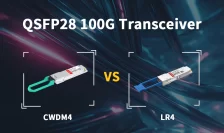
Compare 100g cwdm4 lr4 modules for single-mode fiber: CWDM4 suits short to medium links, LR4 excels at long-distance, high-reliability connections.
Signal integrity and low latency in data center transceivers ensure reliable, error-free data transmission and optimal performance for real-time applications.
Optical networking delivers high speed, security, and scalability for private and hybrid cloud deployments, ensuring reliable and efficient data connectivity.
Optimize AI Fabrics with advanced optical transceivers for faster, reliable GPU-to-GPU communication, improved efficiency, and scalable performance.
Green optical transceivers cut energy use and waste, helping your sustainable data center lower costs and reduce its environmental footprint.
Build a scalable spine-leaf fabric with high-density optical transceivers for efficient growth, high bandwidth, and simplified data center expansion.
Sourcing optical transceivers? Ensure network reliability by checking compatibility, quality standards, supplier reputation, and warranty before purchasing.
Optical modules power high-speed, reliable content delivery in CDNs, enabling fast streaming, low latency, and scalable cloud and AI services.
Troubleshooting optical link issues? Identify and fix common fiber optic problems fast with step-by-step solutions for reliable network performance.
Bandwidth vs Throughput explains the difference between maximum data capacity and actual data speed, helping you diagnose and improve network performance.
Coherent WDM enables high-capacity, long-distance optical data transmission by using amplitude, phase, and polarization detection.
Learn what FCoE Fibre Channel over Ethernet is, how it works, and how it relates to optical modules, DCB, and high-performance data center networking.
A wireless LAN (WLAN) connects devices like laptops and phones using radio waves, enabling flexible, cable-free networking in homes, schools, or offices.
SCP (Secure Copy) enables secure, encrypted file transfers between computers using SSH. See how to use SCP, its features, and best practices.
FTP over SSL (FTPS) secures file transfers by encrypting data with SSL/TLS, protecting sensitive information from unauthorized access during transit.
HTTP over SSL encrypts your data, ensuring secure, private communication and protecting sensitive information from hackers during web browsing.
SVI in networking lets you assign IP addresses to VLANs, enabling inter-VLAN routing and efficient Layer 3 switch management for your network.
exploring cloud migration and its benefits, strategies, best practices, also delve into the essential hardware, like optical modules, that make it all possible.
Network congestion slows internet speeds and causes dropped connections. Learn how to identify, fix, and prevent network congestion for smoother online use.
Learn what network latency is, what causes it, and actionable strategies to reduce it. Discover how high-performance optics from brands like LINK-PP can help.
A Content Delivery Network speeds up website load times by delivering web content from servers closest to users, improving reliability and security.
Compare CFP4 vs. QSFP28 by size, power, density, and deployment fit. Learn which 100G module is better for data centers, telecom, and upgrades.
QSFP28 vs. QSFP-DD explained for engineers. Compare electrical lanes, speed, power, compatibility, and deployment scenarios to select the right 100G or 400G optical module.
Unlock flexible, high-density 100G/112G connectivity. The LQ-LW112-LR4C is a dual-rate QSFP28 10km transceiver supporting both 100GBASE-LR4 and 112GBASE-OTU4 over SMF.
Spine-Leaf Architecture in optical networks enables scalable, non-blocking connectivity and high performance for modern data centers.
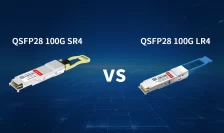
Compare QSFP28 100G SR4 vs LR4 to choose the right 100G transceiver for your network based on distance, fiber type, connectors, and budget.
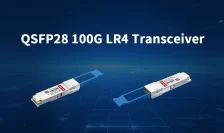
A 100G LR4 transceiver enables 100Gbps data transfer up to 10km using single-mode fiber, ideal for high-speed, long-distance network connections.
Discover the LINK-PP LQ-M85100-SR4C QSFP28 100G SR4 transceiver—ideal for short-reach 100G Ethernet over MMF. Compatible with Cisco, Arista, FS, Dell, and more.
LINK-PP 100G transceivers deliver high-speed connectivity, energy efficiency, and seamless integration, making them ideal for modern networks and data centers.