What are SFP ports on a switch? Learn how SFP ports support fiber and Ethernet connections, how they compare with RJ45 and SFP+, and which module you need.
What Frame Check Sequence (FCS) means, how CRC-32 detects corrupted Ethernet frames, and why FCS errors are commonly associated with cable faults, fiber issues, or optical transceiver problems.
Discover the LQ‑SW40‑SR4C 40GBASE‑SR module: high-speed, low-power, QSFP+ optics for multimode fibre networks. Perfect for data centres and network upgrades.
Discover how optical cross‑connect (OXC) enables all‑optical switching in DWDM/OTN networks, with LINK‑PP SFP modules ensuring seamless integration and superior performance.
Explore what a telecom network is, how it works, and its role in 5G. Learn opportunities, challenges, and how LINK‑PP solutions support next-gen networks.
Machine Learning (ML) enables computers to learn from data, identify patterns, and make predictions, powering tools like voice assistants and recommendations.
Learn what the SFP28 MSA (Small Form-factor Pluggable 28 Multi-Source Agreement) defines, why it matters for 25G Ethernet, and how it ensures module interoperability.
Discover how optical transceivers power Smart Industry 4.0 networks—enabling high-speed, low-latency, reliable connectivity in modern factories with 1G, 10G and 25G modules certified for industrial use.
OSI vs TCP/IP: OSI is ideal for learning network concepts, while TCP/IP is used for real-world networking. Compare their layers, uses, and main differences.
Technical hurdles of 1.6T optical transceivers include signal integrity, power, and cooling, driving a connector revolution for reliable high-speed networks.
Explore how Smart Industry 4.0 Networks enable intelligent manufacturing through high-speed Ethernet, fibre optics, IIoT, and edge computing integration.
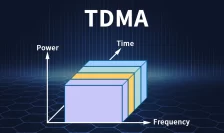
Time Division Multiple Access allows multiple users to share one channel by assigning time slots, ensuring clear calls and efficient data in modern networks.
Discover what FWA is, how it delivers broadband using 4G/5G wireless networks, and why it matters for connectivity. Learn its benefits, challenges, and how LINK-PP SFP modules support reliable FWA deployments.
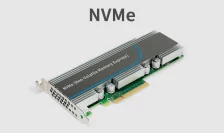
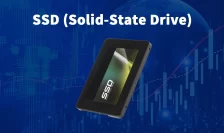
Learn what NVMe (Non-Volatile Memory Express) means, how it compares to SATA SSDs, and why it delivers faster speed, lower latency, and better efficiency.
Differential mode delay in multimode fiber optics limits speed and data rates by causing pulse spreading, reducing signal clarity and network performance.
Discover what an HDD (Hard Disk Drive) is, how it works, and its role in computing. Learn its functions, types, advantages, and how it compares with SSD storage.
Learn what a Network Interface Card (NIC) is, its functions, and types. Discover how NICs enable connectivity in computers, servers, and networking equipment.
ASK Modulation transmits digital data by varying a carrier wave's amplitude, offering a simple, cost-effective solution for basic digital communication systems.
Discover the LQ‑SW40‑SR4C 40GBASE‑SR module: high-speed, low-power, QSFP+ optics for multimode fibre networks. Perfect for data centres and network upgrades.
Learn what hyperconverged infrastructure HCI is, how it compares with virtualization and dHCI, and when Nutanix, Sangfor, or SFP-based designs fit best.
Learn how compatible transceivers work and how to ensure switch compatibility. Avoid SFP errors, vendor locks, and choose the right module confidently.