Broadband is the internet service itself, while WiFi is the wireless technology that distributes it. Learn their differences and how LINK-PP’s optical transceivers enhance broadband performance.
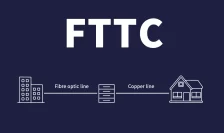
Learn what FTTC (Fiber to the Curb) is, how it works, its pros and cons, and how it compares with FTTH and DSL. Discover applications, equipment needs, and future trends in broadband access.
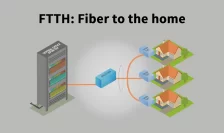
explains how optical splitters enable FTTH, their types (FBT vs. PLC), key ratios, and how they integrate with LINK-PP optical modules for a seamless network.
Compare FTTH and FWA broadband technologies. Learn their differences in speed, cost, deployment, and use cases. Discover how LINK-PP SFP modules support both networks.
Discover what FWA is, how it delivers broadband using 4G/5G wireless networks, and why it matters for connectivity. Learn its benefits, challenges, and how LINK-PP SFP modules support reliable FWA deployments.
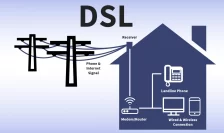
Learn what DSL (Digital Subscriber Line) is, how it works, and the difference between ADSL, VDSL, and other types. Discover advantages, limitations, and the future of DSL technology in broadband access.
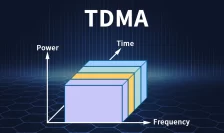
Time Division Multiple Access allows multiple users to share one channel by assigning time slots, ensuring clear calls and efficient data in modern networks.
What are SFP ports on a switch? Learn how SFP ports support fiber and Ethernet connections, how they compare with RJ45 and SFP+, and which module you need.
An SGMII SFP transceiver enables fast Ethernet connections over copper or fiber, supporting flexible speeds and device compatibility in modern networks.
Polarization mode dispersion in fiber optics causes signal distortion and limits data speed. Understand PMD's impact and how to manage it in modern networks.
QAM modulation boosts data transmission by varying amplitude and phase, enabling faster, more efficient communication in Wi-Fi, cable TV, and broadband.
Discover what a PCB (Printed Circuit Board) is, its structure, types, and applications in electronics. Explore LINK-PP’s PCB-based RJ45 and MagJack solutions.
Explore Packet over SONET/SDH (POS), the technology enabling high-speed IP transport over optical networks, with insights into PPP encapsulation and SONET/SDH performance.
Explore the WAN Interface Sublayer (WIS) in 10 Gigabit Ethernet. Learn its role in SONET/SDH integration, data encapsulation, and how LINK-PP 10G optical modules support WAN PHY applications.
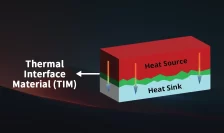
Explore what Thermal Interface Material (TIM) is, its key types, and why it matters in electronics and optical transceivers. Learn how TIM improves heat transfer, boosts device reliability, and supports LINK-PP modules—all explained clearly for better SEO and reader value.
TDM (Time-Division Multiplexing) lets multiple signals share one channel by assigning time slots, improving efficiency in telecom, broadcasting, and networks.
Frequency-Division Multiplexing enables multiple signals to travel on one channel, ensuring clear, efficient communication for phones, TV, and internet.
Discover the LQ‑SW40‑SR4C 40GBASE‑SR module: high-speed, low-power, QSFP+ optics for multimode fibre networks. Perfect for data centres and network upgrades.
Learn what hyperconverged infrastructure HCI is, how it compares with virtualization and dHCI, and when Nutanix, Sangfor, or SFP-based designs fit best.
Learn how compatible transceivers work and how to ensure switch compatibility. Avoid SFP errors, vendor locks, and choose the right module confidently.