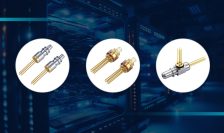
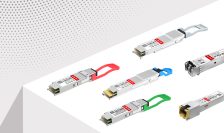
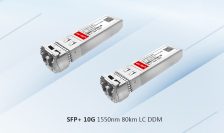
TOSA, ROSA, and BOSA are key components in optical transceivers, enabling high-speed data transmission, reception, and bidirectional communication in modern networks.
Ensure reliable optical transceiver performance with regular tests for metrics like BER, extinction ratio, and receiver sensitivity to avoid network disruptions.
COB, BOX, and TO-CAN packaging impact optical devices by balancing size, cost, and reliability. Learn how COB excels in compact, high-speed applications.
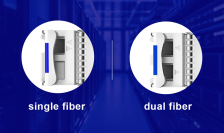
Single fiber transceivers, like the Bidi Transceiver, use one fiber for bidirectional data, while dual fiber transceivers require two fibers for separate TX and RX.
Quality certifications like ISO 9001:2015, RoHS, and FCC ensure optical transceivers meet strict standards for reliability, compliance, and performance.
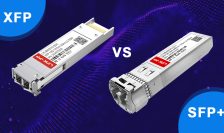
Compare XFP and SFP+ transceivers: XFP offers long-distance, high-speed performance, while SFP+ is compact, energy-efficient, and ideal for short-range tasks.
Understand the role of 1x9 transceivers in fiber optic networks, their cost-effectiveness, compatibility with legacy systems, and reliable data transmission.
Dual rate transceivers operate at two distinct data rates, offering flexibility, cost-effectiveness, and seamless compatibility for modern network upgrades.
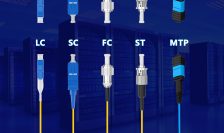
Explore common fiber connector types like SC, LC, ST, FC, and MPO/MTP, their characteristics, and applications in optical transceivers for efficient networks.
What are SFP ports on a switch? Learn how SFP ports support fiber and Ethernet connections, how they compare with RJ45 and SFP+, and which module you need.
Discover SONET and SDH, the backbone technologies for high-speed fiber-optic communications. Learn about their standards, applications, and differences to enhance your network infrastructure knowledge.
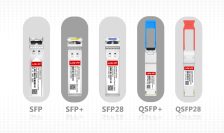
Compare SFP, SFP+, SFP28, QSFP+, and QSFP28 optical transceivers. Learn how form factors affect speed, compatibility, and performance in modern networks.
SERDES interfaces convert parallel data to serial for high-speed, reliable transmission, reducing wiring and improving signal integrity in electronics.
Learn what network latency is, what causes it, and actionable strategies to reduce it. Discover how high-performance optics from brands like LINK-PP can help.
Network congestion slows internet speeds and causes dropped connections. Learn how to identify, fix, and prevent network congestion for smoother online use.
Learn what MTTR (Mean Time to Repair) means, why it matters for system reliability, and how LINK‑PP’s hot-swappable SFP/SFP+ transceivers reduce repair time.
A clear, professional guide to IIoT (Industrial Internet of Things), covering architecture, protocols, security best practices, and suitable networking components for industrial deployments.
Learn what hyperconverged infrastructure HCI is, how it compares with virtualization and dHCI, and when Nutanix, Sangfor, or SFP-based designs fit best.
Understand optical transceiver terminology like SR, LR, ER, and ZR to choose the right module for your network's speed, distance, and compatibility needs.
The LINK-PP LS-DW2810-40I DWDM Transceiver offers 10Gbps speed, 40km range, energy efficiency, and compatibility with major brands for seamless networking.
The LINK-PP LQD-CW400-LR4C 400G QSFP-DD LR4 Transceiver offers 10km range, 400Gbps speed, and energy efficiency, ideal for data centers and enterprise networks.
Discover the key electrical, mechanical, and environmental specs of integrated RJ45 connectors to select the right solution for your Ethernet applications.
Subscribe to LINK-PP
newsletter
Don’t miss anything. Get all the latest posts delivered straight to your inbox.