Troubleshoot optical transceivers efficiently with Digital Diagnostic Monitoring. Monitor real-time data to detect faults early and maintain network reliability.
Discover how DDMI—the Digital Diagnostic Monitoring Interface—gives real-time insights into optical transceivers. Learn its key metrics, benefits, and how LINK-PP modules support it.
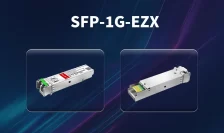
Compare sfp-1g-zx vs sfp-1g-ezx for long-distance fiber. Find out which SFP suits your network’s range, from 80 km to 120 km, and ensure reliable gigabit links.
A fiber optic cable uses thin glass or plastic fibers to transmit data as light pulses, enabling fast, clear, and reliable communication over long distances.
Long-haul transmission uses fiber optic cables to send data quickly and securely over long distances, connecting cities and countries for fast communication.
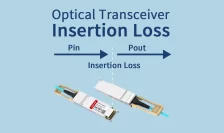
Learn what optical transceiver insertion loss is, how it affects link budgets, BER, and FEC. Includes LC/MPO numbers, control tips, and LINK-PP insights.
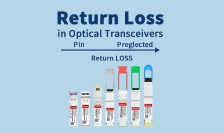
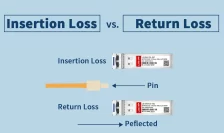
Learn the difference between insertion loss and return loss in optical transceivers, their impact on performance, measurement methods, and LINK-PP product guidance.
What are SFP ports on a switch? Learn how SFP ports support fiber and Ethernet connections, how they compare with RJ45 and SFP+, and which module you need.
An SGMII SFP transceiver enables fast Ethernet connections over copper or fiber, supporting flexible speeds and device compatibility in modern networks.
Physical Medium Dependent (PMD) defines the optical and electrical rules of a PHY—wavelength, power, reach, and test points. Understand PMD specs and how they guide transceiver selection.
Master Mean Time to Acknowledge (MTTA), the key metric for rapid response. Learn its role in system availability, how to calculate it, and proven steps to reduce MTTA for superior network uptime.
Discover MTBF (Mean Time Between Failures), its importance for system reliability, and how LINK‑PP industrial connectors and SFP/SFP+ modules help maximize uptime.
A clear, professional guide to IIoT (Industrial Internet of Things), covering architecture, protocols, security best practices, and suitable networking components for industrial deployments.
Learn what MTTR (Mean Time to Repair) means, why it matters for system reliability, and how LINK‑PP’s hot-swappable SFP/SFP+ transceivers reduce repair time.
Network congestion slows internet speeds and causes dropped connections. Learn how to identify, fix, and prevent network congestion for smoother online use.
Learn what network latency is, what causes it, and actionable strategies to reduce it. Discover how high-performance optics from brands like LINK-PP can help.
Discover the LQ‑SW40‑SR4C 40GBASE‑SR module: high-speed, low-power, QSFP+ optics for multimode fibre networks. Perfect for data centres and network upgrades.
Learn what hyperconverged infrastructure HCI is, how it compares with virtualization and dHCI, and when Nutanix, Sangfor, or SFP-based designs fit best.
Learn how compatible transceivers work and how to ensure switch compatibility. Avoid SFP errors, vendor locks, and choose the right module confidently.