Optical Transceivers

100G Optical Transceivers

Topics
A VXLAN Network Identifier (VNI) is a unique 24-bit segment ID enabling scalable network segmentation and isolation in large VXLAN-based environments.
Open System Interconnect explains the seven OSI layers, showing how devices communicate and ensuring interoperability in modern network environments.
Uplink Failure Detection quickly identifies network link failures, enabling fast response to prevent downtime and maintain business continuity.
VLAN vs VXLAN: Compare scalability, flexibility, and cost to choose the best network segmentation for small setups or large, cloud-based environments.
A VLAN segments a network at the data link layer, improving security, performance, and management by isolating devices within virtual groups.
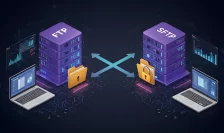
FTP vs SFTP: Compare security, encryption, and use cases to choose the best protocol for safe and efficient file transfers.
Discover how LINK-PP 25G SFP28 optical modules enhance hyperscale data centers with high bandwidth, low latency, and energy efficiency. Learn key benefits and use cases.
A PLC-Programmable Logic Controller automates machines and processes, offering reliable, flexible control for efficient industrial automation systems.
Explore what Supervisory Control and Data Acquisition (SCADA) systems are, how they work, and their vital role in industrial automation and smart infrastructure.
LINK-PP Optical Modules deliver high bandwidth, low latency, and reliability for AI, IoT, and Big Data workloads in scalable, energy-efficient networks.
Learn what an SFP link is, why it fails, and how to fix compatibility, cabling, and link-flap issues with practical checks and clear steps.
What are SFP ports on a switch? Learn how SFP ports support fiber and Ethernet connections, how they compare with RJ45 and SFP+, and which module you need.
Optical transceivers in UAVs enable high-speed, secure, and low-latency drone communication for real-time video, telemetry, and mission-critical data.
Explore the technology behind 400 G QSFP‑DD transceivers, including form factor, modulation, optical lanes, and thermal design.
Understand hot‑pluggable optical modules insertion cycle limits, and learn care tips—including ESD-safe handling, dust prevention, and heat management.
Discover how Small and Medium-sized Businesses SMBs use SFP modules to build scalable, cost-efficient, and future-ready business networks.
An SGMII SFP transceiver enables fast Ethernet connections over copper or fiber, supporting flexible speeds and device compatibility in modern networks.
Explain the key differences between FC SFP and Ethernet SFP modules, including compatibility, SAN vs LAN use cases, speeds, and deployment tips.
Discover Fiber Channel Transceiver use cases, SAN deployment tips, FC SFP compatibility, speeds, troubleshooting, and enterprise storage applications.
Learn what SFP technology is, how SFP modules work, common compatibility issues, and how to choose the right transceiver for your network.
Learn how ROADM enables flexible wavelength routing in DWDM networks. Discover LINK-PP’s compatible optical transceivers for seamless integration.
Central Management Server streamlines server management, enabling secure, centralized control, updates, and monitoring for multiple systems in one place.
Chromatic Dispersion (CD) in fiber optics causes signal spreading, impacting clarity and speed. Learn how CD affects networks and ways to manage it.
Dispersion compensation in optical systems corrects chromatic dispersion, ensuring clear, accurate signals in fiber optic communication and imaging applications.
In-band Network Telemetry embeds real-time monitoring data in each packet, enabling instant network insights, troubleshooting, and performance analysis.
Remote network monitoring enables real-time network management, security, and troubleshooting from any location, supporting both remote teams and multiple site.
Learn what Multipoint-to-Point (MP2P) architecture is, how it works, and how LINK-PP optical transceivers enhance data efficiency in modern fiber networks.
Explore the fundamentals of Point-to-Point (P2P) network architecture, its working principles, and how LINK-PP RJ45 connectors and optical transceivers enable reliable high-speed communication.
Explore point-to-multipoint (P2MP) network architecture, working principle, advantages, and applications. Learn how LINK-PP optical transceivers support P2MP deployments.
Intent-based networking automates network management, aligns operations with business goals, and enhances security using AI and analytics.
Discover the LQ‑SW40‑SR4C 40GBASE‑SR module: high-speed, low-power, QSFP+ optics for multimode fibre networks. Perfect for data centres and network upgrades.
Learn what hyperconverged infrastructure HCI is, how it compares with virtualization and dHCI, and when Nutanix, Sangfor, or SFP-based designs fit best.
What an FC SFP module is, how it differs from Ethernet SFPs, which speeds and fiber types it supports, and how to choose the right one.
Understand SFP 850nm vs 1310nm differences in fiber type, distance, cost, and use cases. Learn which SFP module is right for your network.
Learn what a 2.5 Gbps SFP module is, how it works, and compatibility with SFP+ ports. Explore performance insights, standards, and buying tips.
Learn what an MMF SFP Module is, how it differs from SMF, how to identify it, and how to avoid compatibility mistakes in real deployments.
Learn how compatible transceivers work and how to ensure switch compatibility. Avoid SFP errors, vendor locks, and choose the right module confidently.

Understand OEM SFP modules, pricing, compatibility, lifespan, and differences vs third-party optics. Learn what engineers actually use in networks.

Learn what SFP 10 Gbps (SFP+) is, how it compares to Ethernet, and how to choose the right 10G module. Includes real-world engineer insights.
Understand SFP data rate differences across 1G, 10G, and 25G. Learn compatibility, speed limits, and how to choose the right SFP or SFP+ module.

Add Your Heading Text Here