Optical Transceivers

100G Optical Transceivers

Topics
Learn what an SFP link is, why it fails, and how to fix compatibility, cabling, and link-flap issues with practical checks and clear steps.
What are SFP ports on a switch? Learn how SFP ports support fiber and Ethernet connections, how they compare with RJ45 and SFP+, and which module you need.
Optical transceivers in UAVs enable high-speed, secure, and low-latency drone communication for real-time video, telemetry, and mission-critical data.
Explore the technology behind 400 G QSFP‑DD transceivers, including form factor, modulation, optical lanes, and thermal design.
Understand hot‑pluggable optical modules insertion cycle limits, and learn care tips—including ESD-safe handling, dust prevention, and heat management.
What Frame Check Sequence (FCS) means, how CRC-32 detects corrupted Ethernet frames, and why FCS errors are commonly associated with cable faults, fiber issues, or optical transceiver problems.
Understand what CRC is, how cyclic redundancy check errors happen, how to fix them, and why CRC matters in networking, storage, and SFP modules.
Discover the LQ‑SW40‑SR4C 40GBASE‑SR module: high-speed, low-power, QSFP+ optics for multimode fibre networks. Perfect for data centres and network upgrades.
Discover how optical cross‑connect (OXC) enables all‑optical switching in DWDM/OTN networks, with LINK‑PP SFP modules ensuring seamless integration and superior performance.
Discover how EML works in optical modules, why it’s vital for high‑speed, long‑distance links, and how LINK‑PP brings EML‑based optical transceivers.
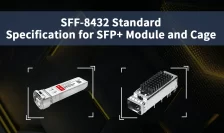
Learn about the SFF-8432 specification, the mechanical standard for SFP+ modules and cages. Discover its role in EMI performance, durability, and interoperability.
Explore features, benefits, and use cases of SFP+ RJ45 10G modules. Learn how LINK-PP’s SFP+ RJ45 module delivers 10G up to 80 m over Cat6a/7 cables.
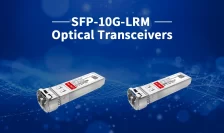
What the SFP-10G-LRM is, how it works, and its benefits. Learn why LINK-PP’s 10GBASE-LRM modules are ideal for upgrading older fiber networks with 220m reach ov
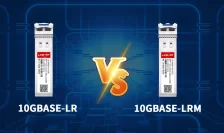
Learn the differences between 10GBASE-LR and 10GBASE-LRM transceivers, including distance, fiber type, and applications of LINK-PP 10G SFP+ modules.
LINK-PP offers high-performance RJ45 connectors, LAN Magenetics, and optical modules, ensuring stable, high-speed, and reliable connections for IoT systems.
LINK-PP delivers Optical Transceivers, RJ45 Connectors, LAN Transformers, and Fiber Optic Solutions for reliable, high-speed telecom networks.
Learn how to classify 10G SFP+ transceivers by interface, distance, fiber type, and technology. Expert guide for selecting LINK‑PP 10G SFP+ modules.
Discover how LINK-PP SFP+ Modules meet the SFF-8431 electrical interface standard, ensuring 10 Gb/s signal integrity, host compatibility, and real-time diagnost
GR-468-CORE Telcordia standard is the global benchmark for optical component reliability. Discover how LINK-PP’s optical modules meet GR-468 requirements.
Select the best 1x9 optical transceiver by matching fiber type, distance, speed, and connector for reliable network performance.
Central Management Server streamlines server management, enabling secure, centralized control, updates, and monitoring for multiple systems in one place.
Chromatic Dispersion (CD) in fiber optics causes signal spreading, impacting clarity and speed. Learn how CD affects networks and ways to manage it.
Learn how ROADM enables flexible wavelength routing in DWDM networks. Discover LINK-PP’s compatible optical transceivers for seamless integration.
Dispersion compensation in optical systems corrects chromatic dispersion, ensuring clear, accurate signals in fiber optic communication and imaging applications.
In-band Network Telemetry embeds real-time monitoring data in each packet, enabling instant network insights, troubleshooting, and performance analysis.
Remote network monitoring enables real-time network management, security, and troubleshooting from any location, supporting both remote teams and multiple site.
Learn what Multipoint-to-Point (MP2P) architecture is, how it works, and how LINK-PP optical transceivers enhance data efficiency in modern fiber networks.
Explore point-to-multipoint (P2MP) network architecture, working principle, advantages, and applications. Learn how LINK-PP optical transceivers support P2MP deployments.
Intent-based networking automates network management, aligns operations with business goals, and enhances security using AI and analytics.
Simple Network Management Protocol (SNMP) enables efficient monitoring and management of network devices, improving visibility, control, and security.
Discover the LQ‑SW40‑SR4C 40GBASE‑SR module: high-speed, low-power, QSFP+ optics for multimode fibre networks. Perfect for data centres and network upgrades.
Learn what hyperconverged infrastructure HCI is, how it compares with virtualization and dHCI, and when Nutanix, Sangfor, or SFP-based designs fit best.
What an FC SFP module is, how it differs from Ethernet SFPs, which speeds and fiber types it supports, and how to choose the right one.
Understand SFP 850nm vs 1310nm differences in fiber type, distance, cost, and use cases. Learn which SFP module is right for your network.
Learn what a 2.5 Gbps SFP module is, how it works, and compatibility with SFP+ ports. Explore performance insights, standards, and buying tips.
Learn how compatible transceivers work and how to ensure switch compatibility. Avoid SFP errors, vendor locks, and choose the right module confidently.

Learn what an MMF SFP Module is, how it differs from SMF, how to identify it, and how to avoid compatibility mistakes in real deployments.

Understand OEM SFP modules, pricing, compatibility, lifespan, and differences vs third-party optics. Learn what engineers actually use in networks.
Learn what SFP 10 Gbps (SFP+) is, how it compares to Ethernet, and how to choose the right 10G module. Includes real-world engineer insights.
Understand SFP data rate differences across 1G, 10G, and 25G. Learn compatibility, speed limits, and how to choose the right SFP or SFP+ module.

Add Your Heading Text Here