What are SFP ports on a switch? Learn how SFP ports support fiber and Ethernet connections, how they compare with RJ45 and SFP+, and which module you need.
What Frame Check Sequence (FCS) means, how CRC-32 detects corrupted Ethernet frames, and why FCS errors are commonly associated with cable faults, fiber issues, or optical transceiver problems.
Discover the LQ‑SW40‑SR4C 40GBASE‑SR module: high-speed, low-power, QSFP+ optics for multimode fibre networks. Perfect for data centres and network upgrades.
Discover how optical cross‑connect (OXC) enables all‑optical switching in DWDM/OTN networks, with LINK‑PP SFP modules ensuring seamless integration and superior performance.
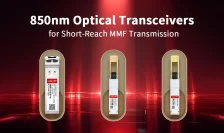
10GBASE-SR, 40GBASE-SR4, 100GBASE-SR4, and 400GBASE-SR8 850nm optical modules are the most reliable and cost-effective choice for short-reach multimode fiber connections.
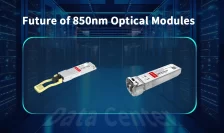
Explore the future of 850nm optical modules in data centers, covering SR8/SR16 advancements, parallel optics, and the impact of single-mode fiber adoption.
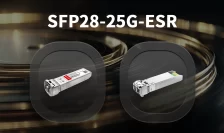
The SFP28-25G-SR transceiver delivers 25Gbps speeds, short-range fiber connectivity, and reliable performance for data centers and enterprise networks.
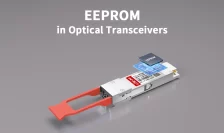
Learn why EEPROM is essential for module identification, monitoring, and compatibility, and how LINK-PP’s SFP/QSFP modules follow SFF-8472 and SFF-8024 Standard.
Learn what SFF-8636 is, why it matters for QSFP/QSFP28 optics, and how its 2-wire management interface, memory map, power classes, and alarms ensure interoperability.
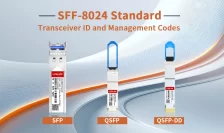
Understand how SFF-8024 ensures accurate module identification, interoperability, and scalability for SFP, SFP+, QSFP, OSFP, and next-generation optical modules.
Learn what a TPU-Tensor Processing Unit is, how Google’s AI accelerator works, key TPU generations, TPU vs GPU, and its role in efficient large-scale machine learning.
Packet loss disrupts your internet by causing lag, buffering, and dropped calls. Find out what causes packet loss and how to fix it for a stable connection.
Learn what Network Processing Units (NPUs) are, how they work, and why NPUs are essential in routers, switches, and 5G networks. Explore benefits, architecture, and key applications.
The Domain Name System (DNS) converts domain names into IP addresses, enabling devices to connect to websites and services quickly and reliably online.
An Optical Channel Monitor measures channel power, wavelength, and OSNR in fiber optic networks, ensuring reliable performance and fast problem detection.
Discover how TSN (Time-Sensitive Networking) brings deterministic, low-latency, and reliable data delivery to Industry 4.0 and automotive Ethernet networks.
SSL encrypts data between your browser and websites, ensuring privacy and security. SSL certificates verify site identity and protect sensitive information.
Discover the LQ‑SW40‑SR4C 40GBASE‑SR module: high-speed, low-power, QSFP+ optics for multimode fibre networks. Perfect for data centres and network upgrades.
Learn what hyperconverged infrastructure HCI is, how it compares with virtualization and dHCI, and when Nutanix, Sangfor, or SFP-based designs fit best.
Learn how compatible transceivers work and how to ensure switch compatibility. Avoid SFP errors, vendor locks, and choose the right module confidently.