Welcome to the LINK-PP Community

More Posts

Avoid costly Fiber Installation Mistakes by spotting kinks, poor cleaning, and bad splicing. Keep your fiber network strong with these expert tips.

Learn how LLDP (Link Layer Discovery Protocol) enhances PoE systems through intelligent power negotiation, efficient energy management, and device discovery in modern Ethernet networks.
Edge computing processes data near its source, enabling faster decisions, reduced latency, and efficient bandwidth use for real-time applications.
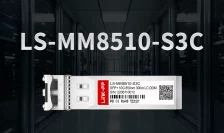
LINK-PP LS-MM8510-S3C Optical Transceiver matches Aruba J9150D in speed, compatibility, and reliability, offering a cost-effective, seamless replacement.
Learn the difference between PSE and PD in PoE networks, how detection & classification work, and which LINK-PP PoE RJ45 products suit your WAP, camera or VoIP deployment.
Learn what a Powered Device (PD) is in PoE networks, how it receives power from a PSE, and explore LINK-PP’s PoE-ready components like LPJK6072AONL and LP41223NL.
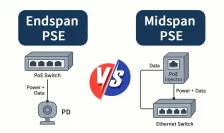
Learn the difference between Endspan and Midspan PSE in PoE networks, their roles, advantages, and how LINK-PP PoE RJ45 connectors support both types.
Power consumption optimization for optical transceivers in edge computing reduces energy use, lowers costs, and boosts network scalability and reliability.
LINK-PP optical transceivers offer full compatibility with Cisco Catalyst 9300 switches, ensuring reliable performance and cost-effective network expansion.
LINK-PP's fiber optic cage assemblies deliver high-density, EMI-shielded, and thermally managed solutions for 400G transceiver form factor needs.
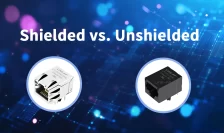
Shielded vs. unshielded RJ45 connectors: Compare protection, cost, and best uses to choose the right RJ45 connectors for your network environment.
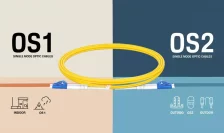
Single Mode Fiber: OS1 vs OS2—compare construction, attenuation, and distance to choose the right fiber for indoor or outdoor network installations.
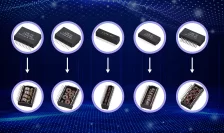
SMT LAN Transformers offer compact size, EMI reduction, and reliable data for LAN devices. Review design tips and top applications in networking.
IoT (Internet of Things) connects devices to share data, enabling smart actions in homes, healthcare, industry, and cities with real-world examples.
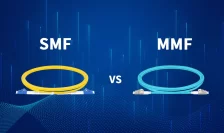
Understand the difference between fibers: single mode offers long-distance, high bandwidth, while multimode suits short runs and lower costs.
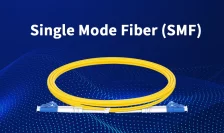
Single mode fiber uses a small core to transmit one light path, enabling high-speed, long-distance data with minimal signal loss and low dispersion.
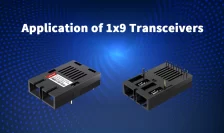
1x9 optical module applications include industrial automation, telecom backhaul, and legacy network upgrades for reliable, cost-effective data links.
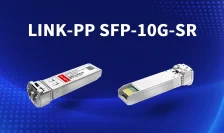
SFP-10G-SR enables fast, reliable short-range connections in data centers, enterprise networks, and campus environments using multimode fiber.
EMC EMS EMI explained: Understand how compatibility, susceptibility, and interference affect device reliability, compliance, and electronic performance.
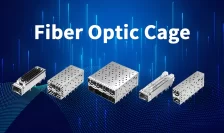
a fiber optic cage (often called sfp cage), Its primary function is to provide the physical and electrical interface required to connect an optical transceiver
Intent-based networking automates network management, aligns operations with business goals, and enhances security using AI and analytics.
Simple Network Management Protocol (SNMP) enables efficient monitoring and management of network devices, improving visibility, control, and security.
Internet Control Message Protocol (ICMP) helps diagnose network issues by sending error and status messages between devices for reliable communication.
Global Positioning System (GPS) uses satellites to provide accurate real-time location, navigation, and tracking for personal, business, and safety needs.
A Network Management System monitors, controls, and protects network devices, providing real-time alerts, automation, and improved network security.
What is CMOS? Learn the fundamentals of Complementary Metal-Oxide-Semiconductor technology, its working principle, key advantages, and its integration with silicon photonics and optical transceivers.
Multi-Link Operation (MLO) in Wi-Fi lets devices use multiple bands at once, boosting speed, stability, and performance in Wi-Fi 7 networks.
Network Time Protocol synchronizes device clocks across networks, ensuring accurate time for data integrity, security, and smooth operations.
Fibre Channel over Ethernet (FCoE) enables Fibre Channel storage traffic to run on Ethernet networks, streamlining data center connectivity and reducing costs.
Precision Time Protocol synchronizes network device clocks for microsecond accuracy, reducing errors and improving reliability in critical applications.
Discover the LQ‑SW40‑SR4C 40GBASE‑SR module: high-speed, low-power, QSFP+ optics for multimode fibre networks. Perfect for data centres and network upgrades.
Learn what hyperconverged infrastructure HCI is, how it compares with virtualization and dHCI, and when Nutanix, Sangfor, or SFP-based designs fit best.
What an FC SFP module is, how it differs from Ethernet SFPs, which speeds and fiber types it supports, and how to choose the right one.
Learn the real difference between 1000base-lh and 1000base-lx, including wavelength, fiber compatibility, Cisco naming, and when to use each.
Learn what a Gigabit SFP transceiver is, compare 1000BASE-SX, LX, and T options, and solve common compatibility and setup issues with confidence.
Learn what a 10/100/1000BASE-T SFP is, how RJ45 copper SFP modules work, compatibility issues, heat concerns, and best use cases in networks.
Compare CFP4 vs. QSFP28 by size, power, density, and deployment fit. Learn which 100G module is better for data centers, telecom, and upgrades.
Explore the Netgear AGM731F datasheet with specs, LC connector, OM1/OM3/OM4 distances, compatibility, power use, and operating limits.
Learn what 40GBASE-ER4 is, how far it reaches over duplex single-mode fiber, what it supports, and how to choose the right QSFP+ optic.
Understand SFP+ 40km (10GBASE-ER) modules, including specs, SMF compatibility, and how to choose the right extended-reach optical transceiver for your network.

Add Your Heading Text Here