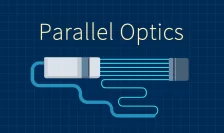
Learn what Parallel Optics is, how it enables high-speed data transmission and how LINK-PP QSFP28 SR4 and 200/400/800G transceiver modules support this technology.
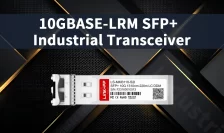
10GBASE-LRM Industrial Transceiver Supports 10.3Gbps, 220m MMF reach, industrial temperature (-40~85°C), and full compatibility with Cisco, Arista, Dell, H3C.
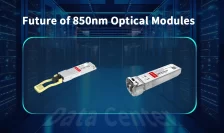
Explore the future of 850nm optical modules in data centers, covering SR8/SR16 advancements, parallel optics, and the impact of single-mode fiber adoption.
10GBASE-SR, 40GBASE-SR4, 100GBASE-SR4, and 400GBASE-SR8 850nm optical modules are the most reliable and cost-effective choice for short-reach multimode fiber connections.
Discover how silicon photonics enables high-speed, energy-efficient optical communication by integrating photonics and silicon electronics—applications, advantages, and challenges.
Discover how silicon photonics is reshaping optical transceivers with higher bandwidth, lower power, and advanced integration for AI, 5G, and data center networks.
Compare Network Time Protocol (NTP) and Precision Time Protocol (PTP) to choose the right time sync solution for your network’s accuracy and hardware needs.
Explore how 6G networks challenge optical transceivers with ultra-high bandwidth demands, and discover advanced solutions like CPO, silicon photonics, and LINK-PP 6G-ready optical modules.
A clear, authoritative guide to 6G networks: what 6G is, IMT-2030 timeline, core technologies (THz, ISAC, AI-native networks), key use cases, and implications for optical modules.
Time-Sensitive Networking ensures reliable, on-time data delivery, while PTP focuses on clock synchronization. Compare TSN vs PTP for your network needs.
Explore the critical differences between CPRI and eCPRI fronthaul interfaces—bandwidth, latency, functional-split, transport topology—and why eCPRI is driving 5G deployments.
Explore how Ethernet transformers enable reliable, EMI-resistant data in avionics Ethernet systems. Learn their functions, design needs, and LINK-PP solutions.
A disaster recovery solution for optical networks ensures rapid recovery, minimizes downtime, and protects critical data center operations from unexpected failures.
Network congestion slows internet speeds and causes dropped connections. Learn how to identify, fix, and prevent network congestion for smoother online use.
Learn PROFIBUS fundamentals, protocol types, architecture, and industrial applications. Includes expert terminology and LINK-PP RJ45 connectors for hybrid systems.
Learn PROFINET fundamentals, architecture, device classes, and real-time communication requirements. Includes hardware insights and LINK-PP integrated RJ45 solutions.
SERDES interfaces convert parallel data to serial for high-speed, reliable transmission, reducing wiring and improving signal integrity in electronics.
Learn what network latency is, what causes it, and actionable strategies to reduce it. Discover how high-performance optics from brands like LINK-PP can help.
Discover the LQ‑SW40‑SR4C 40GBASE‑SR module: high-speed, low-power, QSFP+ optics for multimode fibre networks. Perfect for data centres and network upgrades.
Learn what hyperconverged infrastructure HCI is, how it compares with virtualization and dHCI, and when Nutanix, Sangfor, or SFP-based designs fit best.
Understand SFP+ 40km (10GBASE-ER) modules, including specs, SMF compatibility, and how to choose the right extended-reach optical transceiver for your network.
Subscribe to LINK-PP
newsletter
Don’t miss anything. Get all the latest posts delivered straight to your inbox.