Welcome to the LINK-PP Community

More Posts

DAC vs AOC differences: DAC suits short, low-cost links; AOC excels in long-distance, EMI-prone networks. Choose the right cable for your needs.
RFI Radio Frequency Interference is unwanted radio signals that disrupt electronic devices, causing performance issues and communication problems.
Turns ratio in LAN transformers defines the winding relationship, typically 1:1, ensuring signal integrity, voltage stability, and Ethernet compliance.
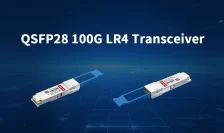
Compare QSFP28 100G SR4 vs LR4 to choose the right 100G transceiver for your network based on distance, fiber type, connectors, and budget.
SFP vs GBIC: Compare size, speed, compatibility, and cost to choose the best module for your 2025 network. See why SFP is preferred for new setups.
What RoHS certification means, which substances are restricted, and why compliance matters for electronic manufacturers and importers.
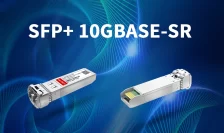
Explore the LINK-PP LS-MM8510-S3C SFP+ 850nm 10GBASE-SR optical transceiver. Up to 300m reach on MMF with low power consumption and full compatibility.
A 100G LR4 transceiver enables 100Gbps data transfer up to 10km using single-mode fiber, ideal for high-speed, long-distance network connections.
Compare THT, SMT, and THR RJ45 connector mounting methods for strength, speed, cost, and best use in network and Ethernet applications.
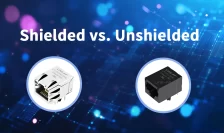
Shielded vs. unshielded RJ45 connectors: Compare protection, cost, and best uses to choose the right RJ45 connectors for your network environment.
Learn what an SFP link is, why it fails, and how to fix compatibility, cabling, and link-flap issues with practical checks and clear steps.
What are SFP ports on a switch? Learn how SFP ports support fiber and Ethernet connections, how they compare with RJ45 and SFP+, and which module you need.
Optical transceivers in UAVs enable high-speed, secure, and low-latency drone communication for real-time video, telemetry, and mission-critical data.
Explore the technology behind 400 G QSFP‑DD transceivers, including form factor, modulation, optical lanes, and thermal design.
Understand hot‑pluggable optical modules insertion cycle limits, and learn care tips—including ESD-safe handling, dust prevention, and heat management.
Discover how Small and Medium-sized Businesses SMBs use SFP modules to build scalable, cost-efficient, and future-ready business networks.
An SGMII SFP transceiver enables fast Ethernet connections over copper or fiber, supporting flexible speeds and device compatibility in modern networks.
Explain the key differences between FC SFP and Ethernet SFP modules, including compatibility, SAN vs LAN use cases, speeds, and deployment tips.
Discover Fiber Channel Transceiver use cases, SAN deployment tips, FC SFP compatibility, speeds, troubleshooting, and enterprise storage applications.
Learn what SFP technology is, how SFP modules work, common compatibility issues, and how to choose the right transceiver for your network.
The Domain Name System (DNS) converts domain names into IP addresses, enabling devices to connect to websites and services quickly and reliably online.
Learn what Remote Terminal Units (RTUs) are, how they work in SCADA systems, key protocols (Modbus, DNP3, IEC), cybersecurity practices, and industrial Ethernet hardware considerations.
Explore how distributed control systems (DCS) empower industrial automation with reliable control loops, real-time monitoring, and enhanced process efficiency — key for modern plants.
An Optical Channel Monitor measures channel power, wavelength, and OSNR in fiber optic networks, ensuring reliable performance and fast problem detection.
Virtual Routing and Forwarding (VRF) enables multiple private routing tables on one device, improving network security, segmentation, and traffic management.
Discover how TSN (Time-Sensitive Networking) brings deterministic, low-latency, and reliable data delivery to Industry 4.0 and automotive Ethernet networks.
User Datagram Protocol enables fast, connectionless data transfer for real-time apps like streaming, gaming, and DNS, prioritizing speed over reliability.
SSL encrypts data between your browser and websites, ensuring privacy and security. SSL certificates verify site identity and protect sensitive information.
Photonic integrated circuits use light to transmit data, offering faster speeds, lower power use, and reliable connections for modern networks.
Hypertext Transfer Protocol enables fast web browsing by letting browsers and servers exchange text, images, and videos securely and efficiently.
Optical transceivers convert electrical signals to light for fast data transfer in telecom, data centers, and 5G networks. Learn their types and uses.
Optical modules serve as the "translators" of fiber-optic networks, enabling seamless electrical-to-optical (E/O) and optical-to-electrical (O/E) conversion.
Optical transceiver modules convert electrical signals to light, enabling high-speed data transmission in fiber optic networks for modern communication.
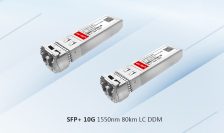
The LINK-PP 10G SFP+ Transceiver LS-SM5510-80C delivers 10.7Gbps speed, 80km range, low power use, and compatibility with top networking devices.
Choose the best LINK-PP SFP Transceiver by considering cable type, distance, speed, and compatibility for reliable and efficient network performance.
Master transceiver installation with 5 simple steps. Learn how to prepare, place, connect, test, and maintain for reliable network performance.
LINK-PP is expanding with new production lines, strategic partnerships, and innovative RJ45 connectors, driving advancements in global connectivity solutions.

ODN in PON networks connects OLTs to ONUs, ensuring efficient optical signal transmission, scalability, and cost-effective high-speed connectivity.
Add Your Heading Text Here