Welcome to the LINK-PP Community

More Posts

Understanding what is SFP-10G-LR, and its core specification, application and comparison with other 10G SFP+ optical transceivers
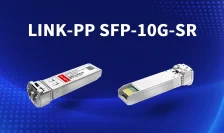
SFP-10G-SR vs SFP-10G-LR: Compare transmission distance, fiber type, and cost to choose the right 10G module for your network's specific needs.
Single Mode Fiber: OS1 vs OS2—compare construction, attenuation, and distance to choose the right fiber for indoor or outdoor network installations.
Choose the right 10G SFP+ transceiver by comparing compatibility, speed, media type, distance, and cost for reliable network upgrades.
Single mode fiber uses a small core to transmit one light path, enabling high-speed, long-distance data with minimal signal loss and low dispersion.
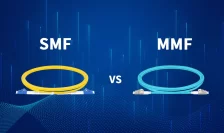
Understand the difference between fibers: single mode offers long-distance, high bandwidth, while multimode suits short runs and lower costs.
SMT LAN Transformers offer compact size, EMI reduction, and reliable data for LAN devices. Review design tips and top applications in networking.
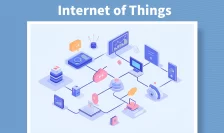
IoT (Internet of Things) connects devices to share data, enabling smart actions in homes, healthcare, industry, and cities with real-world examples.
EMC EMS EMI explained: Understand how compatibility, susceptibility, and interference affect device reliability, compliance, and electronic performance.
SFP-10G-SR enables fast, reliable short-range connections in data centers, enterprise networks, and campus environments using multimode fiber.
Explore the world of resistors with our in-depth guide. Learn about different types, their applications, and specifications to make informed decisions for your electronic projects.
Explore the fundamental differences between GPUs and CPUs, their architectural distinctions, and performance benchmarks to understand which processor suits your computing needs.
Long Term Evolution (LTE) is a 4G wireless standard offering high-speed, low-latency data for mobile devices, enabling fast, reliable internet connections.
Artificial intelligence uses data and algorithms to help computers solve problems, make decisions, and automate tasks in daily life.
Software-Defined Networking offers centralized control, flexibility, and automation for efficient network management and rapid adaptation to changing needs.
An Optical Monitoring System tracks fiber optic signals in real time, helping detect faults and improve network reliability and security.
What is Ethernet? Ethernet is a wired networking technology offering fast, stable, and secure connections for homes, offices, and businesses.
Explore how Data Processing Units (DPUs) optimize data center performance, accelerating networking, storage, and security. Discover LINK-PP optical modules for high-speed interconnects.
Compare FDMA, TDMA, and CDMA for wireless networks. See which access method offers better efficiency, capacity, and future-ready performance.
OFDMA vs SC-FDMA: Compare their roles in LTE/5G, impact on download speed, battery life, and why networks use OFDMA for downlink and SC-FDMA for uplink.
Discover the Decision Feedback Equalizer (DFE), the nonlinear technique essential for minimizing ISI. Learn how DFE improves bit BER in optics transceivers and long-haul data links.
Learn what FFE (Feed-Forward Equalizer) is, how transmit equalization works, and why FFE is essential for high-speed optical modules and SerDes signal integrity.
A wireless LAN (WLAN) connects devices like laptops and phones using radio waves, enabling flexible, cable-free networking in homes, schools, or offices.
Learn how the Continuous-Time Linear Equalizer (CTLE) dramatically improves signal integrity in SFP modules, effectively combating channel loss and maximizing link performance.
HTTP over SSL encrypts your data, ensuring secure, private communication and protecting sensitive information from hackers during web browsing.
Understand TDCEQ, the critical PAM4 transmitter quality metric for modern optical modules. Learn how tdecq measures vertical eye closure and affects 50/100/400g module performance and compliance.
SCP (Secure Copy) enables secure, encrypted file transfers between computers using SSH. See how to use SCP, its features, and best practices.
FTP over SSL (FTPS) secures file transfers by encrypting data with SSL/TLS, protecting sensitive information from unauthorized access during transit.
SVI in networking lets you assign IP addresses to VLANs, enabling inter-VLAN routing and efficient Layer 3 switch management for your network.
exploring cloud migration and its benefits, strategies, best practices, also delve into the essential hardware, like optical modules, that make it all possible.
Discover the LQ‑SW40‑SR4C 40GBASE‑SR module: high-speed, low-power, QSFP+ optics for multimode fibre networks. Perfect for data centres and network upgrades.
Learn what hyperconverged infrastructure HCI is, how it compares with virtualization and dHCI, and when Nutanix, Sangfor, or SFP-based designs fit best.
What an FC SFP module is, how it differs from Ethernet SFPs, which speeds and fiber types it supports, and how to choose the right one.
Learn the real difference between 1000base-lh and 1000base-lx, including wavelength, fiber compatibility, Cisco naming, and when to use each.
Learn what a Gigabit SFP transceiver is, compare 1000BASE-SX, LX, and T options, and solve common compatibility and setup issues with confidence.
Learn what a 10/100/1000BASE-T SFP is, how RJ45 copper SFP modules work, compatibility issues, heat concerns, and best use cases in networks.
Compare CFP4 vs. QSFP28 by size, power, density, and deployment fit. Learn which 100G module is better for data centers, telecom, and upgrades.
Explore the Netgear AGM731F datasheet with specs, LC connector, OM1/OM3/OM4 distances, compatibility, power use, and operating limits.
Understand SFP+ 40km (10GBASE-ER) modules, including specs, SMF compatibility, and how to choose the right extended-reach optical transceiver for your network.

Learn QSFP+ 40GBASE-LR4 specs, distance limits, compatibility tips, and buying advice. Avoid common deployment issues with this expert guide.

Add Your Heading Text Here