Understand the differences between FTTH and FTTB. Learn how LINK-PP’s optical transceivers support both fiber access architectures for reliable connectivity.
Discover what data bandwidth means, how it affects devices, and why it matters in digital communication. Learn how LINK-PP supports high-speed data transfer.
Wave Soldering vs. Reflow Soldering: Compare processes, applications, costs, and best uses for PCB assembly to choose the right method for your project.
Explore detailed insights into FTTx deployments including FTTH, FTTB, FTTC, and more. Learn how LINK-PP’s optical modules support reliable fiber networks.
5G backhaul links cell sites to core networks, enabling high-speed, low-latency 5G services. Strong backhaul is vital for 2025’s data and device growth.
Technical hurdles of 1.6T optical transceivers include signal integrity, power, and cooling, driving a connector revolution for reliable high-speed networks.
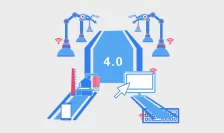
Explore how Smart Industry 4.0 Networks enable intelligent manufacturing through high-speed Ethernet, fibre optics, IIoT, and edge computing integration.
Semiconductor material properties determine optical module speed, efficiency, and reliability by affecting bandgap, carrier mobility, and thermal conductivity.
Learn what the SFF-8402 specification is, how it defines the SFP28 interface standard, and why it is essential for 25G / 28G optical module interoperability and system reliability.
Explore how RJ45 Magjack connectors enable robust Ethernet communication between PLCs and SCADA hosts in industrial automation, ensuring signal integrity and system reliability.
Learn how optical modules enhance PLC system performance, enabling high-speed, long-distance communication and reliable industrial automation networks.
Discover how LINK-PP 25G SFP28 optical modules enhance hyperscale data centers with high bandwidth, low latency, and energy efficiency. Learn key benefits and use cases.
Discover the Decision Feedback Equalizer (DFE), the nonlinear technique essential for minimizing ISI. Learn how DFE improves bit BER in optics transceivers and long-haul data links.
Learn what FFE (Feed-Forward Equalizer) is, how transmit equalization works, and why FFE is essential for high-speed optical modules and SerDes signal integrity.
A wireless LAN (WLAN) connects devices like laptops and phones using radio waves, enabling flexible, cable-free networking in homes, schools, or offices.
Learn how the Continuous-Time Linear Equalizer (CTLE) dramatically improves signal integrity in SFP modules, effectively combating channel loss and maximizing link performance.
Understand TDCEQ, the critical PAM4 transmitter quality metric for modern optical modules. Learn how tdecq measures vertical eye closure and affects 50/100/400g module performance and compliance.
Learn what FMMU (Fieldbus Memory Management Unit) is and how it enables real-time EtherCAT communication through efficient memory mapping and on-the-fly data processing.
Discover the LQ‑SW40‑SR4C 40GBASE‑SR module: high-speed, low-power, QSFP+ optics for multimode fibre networks. Perfect for data centres and network upgrades.
Learn what hyperconverged infrastructure HCI is, how it compares with virtualization and dHCI, and when Nutanix, Sangfor, or SFP-based designs fit best.