Turns ratio in LAN transformers defines the winding relationship, typically 1:1, ensuring signal integrity, voltage stability, and Ethernet compliance.
SMT, or Surface Mount Technology, is a method for mounting electronic components directly onto PCB surfaces, enabling compact designs and efficient manufacturing.
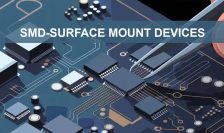
A Surface-Mount Device (SMD) is a compact electronic component mounted directly on a PCB, enabling smaller, faster, and more efficient modern electronics.
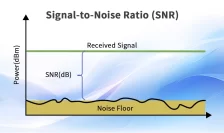
SNR, or signal-to-noise ratio, measures signal strength versus noise. High SNR means clearer audio, images, and data for better overall signal quality.
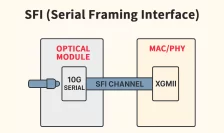
Learn how the Serial Framing Interface (SFI) enables high-speed data transmission in 10G SFP+ and 40G QSFP+ optical modules. Explore SFI channels, XGMII conversion, and module interoperability for reliable networking.
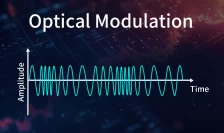
Discover the differences between silicon photonic modulators and traditional optical modulators, their working principles, advantages, and role in next-generation optical transceivers.
Explore how RJ45 connectors evolve to meet 6G’s ultra-low latency and ultra-high-speed communication challenges. Discover LINK-PP’s advanced high-frequency Ethernet solutions.
Discover how silicon photonics enables high-speed, energy-efficient optical communication by integrating photonics and silicon electronics—applications, advantages, and challenges.
Discover how silicon photonics is reshaping optical transceivers with higher bandwidth, lower power, and advanced integration for AI, 5G, and data center networks.
Compare Network Time Protocol (NTP) and Precision Time Protocol (PTP) to choose the right time sync solution for your network’s accuracy and hardware needs.
Explore how 6G networks challenge optical transceivers with ultra-high bandwidth demands, and discover advanced solutions like CPO, silicon photonics, and LINK-PP 6G-ready optical modules.
A clear, authoritative guide to 6G networks: what 6G is, IMT-2030 timeline, core technologies (THz, ISAC, AI-native networks), key use cases, and implications for optical modules.
Time-Sensitive Networking ensures reliable, on-time data delivery, while PTP focuses on clock synchronization. Compare TSN vs PTP for your network needs.
Explore the critical differences between CPRI and eCPRI fronthaul interfaces—bandwidth, latency, functional-split, transport topology—and why eCPRI is driving 5G deployments.
Explore how Ethernet transformers enable reliable, EMI-resistant data in avionics Ethernet systems. Learn their functions, design needs, and LINK-PP solutions.
EMC Electromagnetic Compatibility ensures devices work safely and reliably in shared environments by minimizing interference and meeting compliance standards.
Central Management Server streamlines server management, enabling secure, centralized control, updates, and monitoring for multiple systems in one place.
Dispersion compensation in optical systems corrects chromatic dispersion, ensuring clear, accurate signals in fiber optic communication and imaging applications.
A Digital Signal Processor in optical transceivers enables fast data rates, advanced modulation, and real-time signal correction for reliable high-speed links.
What is DWDM? Dense Wavelength Division Multiplexing lets multiple data channels travel on one fiber, boosting bandwidth and efficiency in optical networks.
Discover what data bandwidth means, how it affects devices, and why it matters in digital communication. Learn how LINK-PP supports high-speed data transfer.
Discover the key electrical, mechanical, and environmental specs of integrated RJ45 connectors to select the right solution for your Ethernet applications.
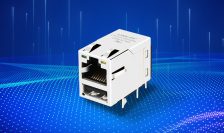
The RJ45 USB connector Combo by LINK-PP, LPJU3102ABNL, merges Ethernet and USB, offering durability, EMI shielding, and LED indicators for 10/100 Base-T networks.
The LINK-PP LQD-CW400-LR4C 400G QSFP-DD LR4 Transceiver offers 10km range, 400Gbps speed, and energy efficiency, ideal for data centers and enterprise networks.
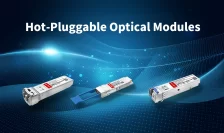
Optical modules serve as the "translators" of fiber-optic networks, enabling seamless electrical-to-optical (E/O) and optical-to-electrical (O/E) conversion.