Discover the LQ‑SW40‑SR4C 40GBASE‑SR module: high-speed, low-power, QSFP+ optics for multimode fibre networks. Perfect for data centres and network upgrades.
Explore the difference between DDMI (interface) and DDM (diagnostics) in optical transceivers. Learn how each supports real-time monitoring and how LINK-PP products leverage them.
Discover how 1310 nm optical modules serve essential roles in data centers, metro networks, and enterprise links. Learn use cases and explore LINK-PP’s reliable modules.
Explore the most common MSA protocols used in optical transceivers. Learn about SFP, SFP+, QSFP, CFP, and more—plus how LINK-PP's compatible modules deliver reliable performance.
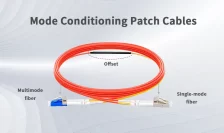
Mode conditioning patch cables enable singlemode devices to work with multimode fiber, reducing signal distortion and differential mode delay in networks.
Discover how silicon photonics enables high-speed, energy-efficient optical communication by integrating photonics and silicon electronics—applications, advantages, and challenges.
Discover how silicon photonics is reshaping optical transceivers with higher bandwidth, lower power, and advanced integration for AI, 5G, and data center networks.
Compare Network Time Protocol (NTP) and Precision Time Protocol (PTP) to choose the right time sync solution for your network’s accuracy and hardware needs.
Explore how 6G networks challenge optical transceivers with ultra-high bandwidth demands, and discover advanced solutions like CPO, silicon photonics, and LINK-PP 6G-ready optical modules.
A clear, authoritative guide to 6G networks: what 6G is, IMT-2030 timeline, core technologies (THz, ISAC, AI-native networks), key use cases, and implications for optical modules.
Time-Sensitive Networking ensures reliable, on-time data delivery, while PTP focuses on clock synchronization. Compare TSN vs PTP for your network needs.
Explore the critical differences between CPRI and eCPRI fronthaul interfaces—bandwidth, latency, functional-split, transport topology—and why eCPRI is driving 5G deployments.
Explore how Ethernet transformers enable reliable, EMI-resistant data in avionics Ethernet systems. Learn their functions, design needs, and LINK-PP solutions.
A disaster recovery solution for optical networks ensures rapid recovery, minimizes downtime, and protects critical data center operations from unexpected failures.
Discover what a Wireless Access Point (WAP) is, how it works, and why it’s essential for robust Wi-Fi networks. Learn about types, use cases, and LINK-PP LPJK6072AONL PoE RJ45 connector integration.
Learn what OMA (Optical Modulation Amplitude) means in optical communications, how to calculate it from P₁/P₀ and extinction ratio, and why it’s critical in transceiver specs like LINK-PP SFP modules.
Receiver sensitivity shows the lowest signal a device can detect. Learn how it impacts connection quality and what values mean for your device’s performance.
Discover what Big Data is, its 5V characteristics, real-world applications, technologies, and future trends. Learn how optical transceivers support Big Data networks.
Extinction ratio measures signal clarity in optical systems, impacting data reliability and error rates. High extinction ratio ensures accurate transmission.
Common-Mode Choke (CMC) explained: learn how CMCs block common-mode noise, preserve differential Ethernet signals, and what specs matter when selecting CMCs for LAN transformers and PoE.
Discover what an inductor is, how it functions in electronic circuits, its types, and real-world applications. Learn about this essential component in modern electronics.
Discover the LQ‑SW40‑SR4C 40GBASE‑SR module: high-speed, low-power, QSFP+ optics for multimode fibre networks. Perfect for data centres and network upgrades.
Learn what hyperconverged infrastructure HCI is, how it compares with virtualization and dHCI, and when Nutanix, Sangfor, or SFP-based designs fit best.
Understand SFP+ 40km (10GBASE-ER) modules, including specs, SMF compatibility, and how to choose the right extended-reach optical transceiver for your network.
Subscribe to LINK-PP
newsletter
Don’t miss anything. Get all the latest posts delivered straight to your inbox.