Posts

Popular article

Through‑Hole Reflow Soldering enables simultaneous soldering of through-hole and surface-mount components in a single efficient reflow process.

Learn what an SFP link is, why it fails, and how to fix compatibility, cabling, and link-flap issues with practical checks and clear steps.
Through‑Hole Reflow Soldering enables simultaneous soldering of through-hole and surface-mount components in a single efficient reflow process.
Discover the LQ‑SW40‑SR4C 40GBASE‑SR module: high-speed, low-power, QSFP+ optics for multimode fibre networks. Perfect for data centres and network upgrades.
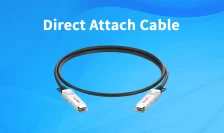
Learn what Direct Attach Cables are, how they work, their advantages over fiber optics & AOCs, common types, and why they dominate short-reach data center links
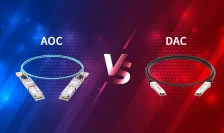
DAC vs AOC differences: DAC suits short, low-cost links; AOC excels in long-distance, EMI-prone networks. Choose the right cable for your needs.
RFI Radio Frequency Interference is unwanted radio signals that disrupt electronic devices, causing performance issues and communication problems.
Turns ratio in LAN transformers defines the winding relationship, typically 1:1, ensuring signal integrity, voltage stability, and Ethernet compliance.
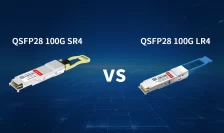
Compare QSFP28 100G SR4 vs LR4 to choose the right 100G transceiver for your network based on distance, fiber type, connectors, and budget.
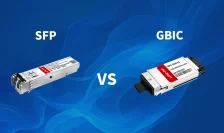
SFP vs GBIC: Compare size, speed, compatibility, and cost to choose the best module for your 2025 network. See why SFP is preferred for new setups.
What RoHS certification means, which substances are restricted, and why compliance matters for electronic manufacturers and importers.
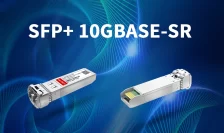
Explore the LINK-PP LS-MM8510-S3C SFP+ 850nm 10GBASE-SR optical transceiver. Up to 300m reach on MMF with low power consumption and full compatibility.
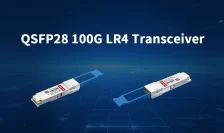
A 100G LR4 transceiver enables 100Gbps data transfer up to 10km using single-mode fiber, ideal for high-speed, long-distance network connections.
Compare THT, SMT, and THR RJ45 connector mounting methods for strength, speed, cost, and best use in network and Ethernet applications.
ONU vs ONT explained: Understand the key differences, roles, and which device suits your fiber optic internet needs for home or shared buildings.
What is Optical Line Terminal (OLT)? An OLT is the main device in fiber networks, converting signals and managing data for fast, stable internet connections.
What is Optical Network Unit (ONU)? An ONU converts fiber optic signals for your devices, ensuring fast, stable internet at home or business.
Explore the differences between HDD, SSD, and NVMe drives. Learn about speed, cost, and best use cases, and see how LINK-PP connectivity solutions support storage systems.
Discover what data centers are, how they work, their main types, and future trends. Learn why data centers power today’s cloud, AI, and digital services.
An ONT connects your home to fiber-optic internet by converting light signals into digital data for your devices, enabling fast and reliable service.
Active Optical Cable offers high speed, low power use, and reliable connections. Find out how AOC fits data centers, offices, and home setups.
ASK is ideal for simple, low-cost projects, while FSK suits noisy environments and PSK offers high data rates. Compare ASK, FSK, and PSK here.
Discover the differences between HDD and SSD in speed, reliability, and cost. Learn which storage drive suits your needs and explore LINK-PP connectivity solutions.
This guide clarifies the differences between soldered SFF and 1x9 transceiver form factors. Learn their specs, applications, and how to choose for your network.
Power Over Ethernet (PoE) combines power and data delivery via a single cable, simplifying installations for devices like IP cameras, VoIP phones, and IoT systems.
PCBA stands for Printed Circuit Board Assembly. It's essentially a bare PCB that has had all the necessary electronic components soldered onto it.
Wavelength Division Multiplexing (WDM) uses optical transceiver modules to send multiple data streams through a single fiber, boosting bandwidth and efficiency.
The TOSA is a critical component in optical transceivers, converting electrical signals into optical signals for high-speed fiber optic communication.
The Receiver Optical Sub-Assembly (ROSA) is a critical optoelectronic component in Optical Tranceivers, responsible for converting incoming optical signals into
DDM/DOM in optical transceivers provides real-time monitoring of key parameters like temperature and power, ensuring network reliability and early issue detection.
Discover the LQ‑SW40‑SR4C 40GBASE‑SR module: high-speed, low-power, QSFP+ optics for multimode fibre networks. Perfect for data centres and network upgrades.
Learn what hyperconverged infrastructure HCI is, how it compares with virtualization and dHCI, and when Nutanix, Sangfor, or SFP-based designs fit best.
What an FC SFP module is, how it differs from Ethernet SFPs, which speeds and fiber types it supports, and how to choose the right one.
Learn the real difference between 1000base-lh and 1000base-lx, including wavelength, fiber compatibility, Cisco naming, and when to use each.
Learn what a Gigabit SFP transceiver is, compare 1000BASE-SX, LX, and T options, and solve common compatibility and setup issues with confidence.
Learn what a 10/100/1000BASE-T SFP is, how RJ45 copper SFP modules work, compatibility issues, heat concerns, and best use cases in networks.
Compare CFP4 vs. QSFP28 by size, power, density, and deployment fit. Learn which 100G module is better for data centers, telecom, and upgrades.
Explore the Netgear AGM731F datasheet with specs, LC connector, OM1/OM3/OM4 distances, compatibility, power use, and operating limits.
Learn what 40GBASE-ER4 is, how far it reaches over duplex single-mode fiber, what it supports, and how to choose the right QSFP+ optic.
Understand SFP+ 40km (10GBASE-ER) modules, including specs, SMF compatibility, and how to choose the right extended-reach optical transceiver for your network.