What are SFP ports on a switch? Learn how SFP ports support fiber and Ethernet connections, how they compare with RJ45 and SFP+, and which module you need.
What are SFP ports on a switch? Learn how SFP ports support fiber and Ethernet connections, how they compare with RJ45 and SFP+, and which module you need.
Learn what hyperconverged infrastructure HCI is, how it compares with virtualization and dHCI, and when Nutanix, Sangfor, or SFP-based designs fit best.
Technical hurdles of 1.6T optical transceivers include signal integrity, power, and cooling, driving a connector revolution for reliable high-speed networks.
OSI vs TCP/IP: OSI is ideal for learning network concepts, while TCP/IP is used for real-world networking. Compare their layers, uses, and main differences.
Explore how Smart Industry 4.0 Networks enable intelligent manufacturing through high-speed Ethernet, fibre optics, IIoT, and edge computing integration.
Explore the LINK-PP LS-SM3125-10I industrial-grade SFP28 transceiver, delivering 25 Gb/s over 10 km single-mode fibre at 1310 nm, with DOM and wide-temperature support for backbone and 5G front-haul.
Maximize network efficiency with LS-Explore practical tips and best-practice deployments for the LINK-PP LS-BL332710-60C 10G BiDi SFP+ (60 km). Learn when to choose BiDi, how to validate links, and deployment checklists.
Machine Learning (ML) enables computers to learn from data, identify patterns, and make predictions, powering tools like voice assistants and recommendations.
Learn what the SFP28 MSA (Small Form-factor Pluggable 28 Multi-Source Agreement) defines, why it matters for 25G Ethernet, and how it ensures module interoperability.
Understand the differences between FTTH and FTTB. Learn how LINK-PP’s optical transceivers support both fiber access architectures for reliable connectivity.
Optical transceivers enable high-speed, reliable data transfer in submarine cables, powering global connectivity and meeting growing bandwidth demands underwater.
LPO transceivers cut power use, lower latency, and boost reliability in data centers, making them ideal for high-speed, energy-efficient optical links.
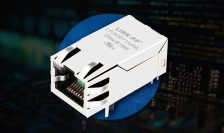
Learn the differences between integrated and separate RJ45 connectors from LINK-PP. Discover how to choose the right solution for your Ethernet applications.
CPO vs LPO: Compare key differences, benefits, power savings, and best use cases for data centers to choose the right optical technology for your needs.
An active optical cable uses built-in transceivers to convert electrical signals to light, enabling high-speed, long-distance data transmission with minimal loss.
Optical Modules differ by fiber count and mode: single/dual fiber affects cabling, while single-mode/multi-mode impacts distance and speed in networks.
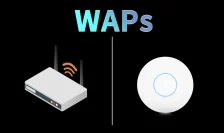
Discover what a Wireless Access Point (WAP) is, how it works, and why it’s essential for robust Wi-Fi networks. Learn about types, use cases, and LINK-PP LPJK6072AONL PoE RJ45 connector integration.
Explore the WAN Interface Sublayer (WIS) in 10 Gigabit Ethernet. Learn its role in SONET/SDH integration, data encapsulation, and how LINK-PP 10G optical modules support WAN PHY applications.
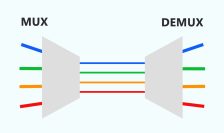
Wavelength Division Multiplexing (WDM) uses optical transceiver modules to send multiple data streams through a single fiber, boosting bandwidth and efficiency.
Discover what Big Data is, its 5V characteristics, real-world applications, technologies, and future trends. Learn how optical transceivers support Big Data networks.
Explore how distributed control systems (DCS) empower industrial automation with reliable control loops, real-time monitoring, and enhanced process efficiency — key for modern plants.
Learn what eCPRI (Enhanced Common Public Radio Interface) is, how it enables efficient 5G fronthaul with lower latency, and how optical modules support eCPRI networks.
Learn what hyperconverged infrastructure HCI is, how it compares with virtualization and dHCI, and when Nutanix, Sangfor, or SFP-based designs fit best.
LINK-PP is expanding with new production lines, strategic partnerships, and innovative RJ45 connectors, driving advancements in global connectivity solutions.
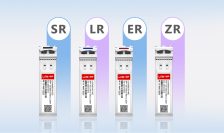
Understand optical transceiver terminology like SR, LR, ER, and ZR to choose the right module for your network's speed, distance, and compatibility needs.
LINK-PP 100G transceivers deliver high-speed connectivity, energy efficiency, and seamless integration, making them ideal for modern networks and data centers.
Learn how to choose the best LINK-PP 10G optical transceivers for your network by evaluating compatibility, performance, cost, and scalability effectively.
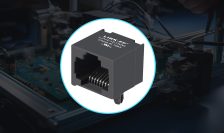
The LPJE101NNL 8P8C RJ45 Jack offers reliable 10/100 Base-T Ethernet connectivity with gold-plated contacts, compact design, and compliance with IEEE 802.3 standards.