Welcome to the LINK-PP Community

More Posts

GR-468-CORE Telcordia standard is the global benchmark for optical component reliability. Discover how LINK-PP’s optical modules meet GR-468 requirements.
Select the best 1x9 optical transceiver by matching fiber type, distance, speed, and connector for reliable network performance.
Select the best fiber optic cage by considering compatibility, port density, thermal management (heatsink options), light pipe integration, EMI shielding, etc.
Learn how VCSEL, FP, DFB, and EML lasers differ in optical modules. Explore their key traits, common uses, and how LINK‑PP incorporates them in transceivers.
What is UL94 V-0? Learn the strictest fire safety rating, real procurement value, compliance scenarios, and get LINK-PP UL94 V-0 certified network solutions.
Learn about J-STD-002 solderability testing and how LINK-PP’s Integrated RJ45, LAN Transformers, Modular Jacks, and Fiber Optic Cages meet this standard.
Cloud Computing offers flexible, pay-as-you-go resources, while high performance computing delivers maximum speed for demanding tasks.
Cloud computing provides online access to servers, storage, and apps, letting users save files, run software, and work from anywhere securely.
A router connects your network to the internet, while a switch links devices within your LAN. Compare router vs switch for your 2025 network needs.
Explore the LINK-PP LS-SM3110-10C 10G 10km SFP+ module. Discover specs, applications & why it's a top choice for reliable, long-distance fiber connectivity.
The TCP/IP model organizes network communication into four layers, enabling secure data exchange between devices across the internet.
Discover SONET and SDH, the backbone technologies for high-speed fiber-optic communications. Learn about their standards, applications, and differences to enhance your network infrastructure knowledge.
Learn what an SFP link is, why it fails, and how to fix compatibility, cabling, and link-flap issues with practical checks and clear steps.
What are SFP ports on a switch? Learn how SFP ports support fiber and Ethernet connections, how they compare with RJ45 and SFP+, and which module you need.
MSA standardize optical transceiver designs, ensuring compatibility, reducing costs, and driving innovation across networking equipment.
Medical-grade RJ45 connector ensures safe, reliable, and compliant network connections in medical devices, meeting IEC 60601-1 and sterilization standards.
Optical transceivers in UAVs enable high-speed, secure, and low-latency drone communication for real-time video, telemetry, and mission-critical data.
Explore the technology behind 400 G QSFP‑DD transceivers, including form factor, modulation, optical lanes, and thermal design.
Understand hot‑pluggable optical modules insertion cycle limits, and learn care tips—including ESD-safe handling, dust prevention, and heat management.
SFP-10G-ZR is a 10Gbps transceiver for single-mode fiber, supporting up to 80 km reach at 1550nm, ideal for long-distance 10G Ethernet connections.
The TOSA is a critical component in optical transceivers, converting electrical signals into optical signals for high-speed fiber optic communication.
Through-Hole Technology (THT) involves inserting component leads into PCB holes and soldering them, ensuring durable connections for high-reliability applications.
Through‑Hole Reflow Soldering enables simultaneous soldering of through-hole and surface-mount components in a single efficient reflow process.
Turns ratio in LAN transformers defines the winding relationship, typically 1:1, ensuring signal integrity, voltage stability, and Ethernet compliance.
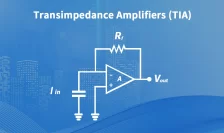
Transimpedance Amplifiers (TIAs) convert sensor current to voltage using an op-amp and feedback resistor, enabling accurate signal measurement.
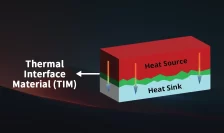
Explore what Thermal Interface Material (TIM) is, its key types, and why it matters in electronics and optical transceivers. Learn how TIM improves heat transfer, boosts device reliability, and supports LINK-PP modules—all explained clearly for better SEO and reader value.
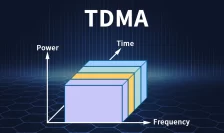
Time Division Multiple Access allows multiple users to share one channel by assigning time slots, ensuring clear calls and efficient data in modern networks.
Discover how TSN (Time-Sensitive Networking) brings deterministic, low-latency, and reliable data delivery to Industry 4.0 and automotive Ethernet networks.
Learn what a TPU-Tensor Processing Unit is, how Google’s AI accelerator works, key TPU generations, TPU vs GPU, and its role in efficient large-scale machine learning.
SMT, or Surface Mount Technology, is a method for mounting electronic components directly onto PCB surfaces, enabling compact designs and efficient manufacturing.
10GBASE-LRM Industrial Transceiver Supports 10.3Gbps, 220m MMF reach, industrial temperature (-40~85°C), and full compatibility with Cisco, Arista, Dell, H3C.
Discover the LQ‑SW40‑SR4C 40GBASE‑SR module: high-speed, low-power, QSFP+ optics for multimode fibre networks. Perfect for data centres and network upgrades.
Learn what hyperconverged infrastructure HCI is, how it compares with virtualization and dHCI, and when Nutanix, Sangfor, or SFP-based designs fit best.

Industrial RJ45 Magjack LPJ4014CNL offers robust EMI shielding, gold contacts, and certifications, ensuring reliable IoT device connectivity in any environment.

What an FC SFP module is, how it differs from Ethernet SFPs, which speeds and fiber types it supports, and how to choose the right one.

Learn the real difference between 1000base-lh and 1000base-lx, including wavelength, fiber compatibility, Cisco naming, and when to use each.
Learn what a Gigabit SFP transceiver is, compare 1000BASE-SX, LX, and T options, and solve common compatibility and setup issues with confidence.
Learn what a 10/100/1000BASE-T SFP is, how RJ45 copper SFP modules work, compatibility issues, heat concerns, and best use cases in networks.
Compare CFP4 vs. QSFP28 by size, power, density, and deployment fit. Learn which 100G module is better for data centers, telecom, and upgrades.
Explore the Netgear AGM731F datasheet with specs, LC connector, OM1/OM3/OM4 distances, compatibility, power use, and operating limits.