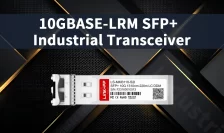
10GBASE-LRM Industrial Transceiver Supports 10.3Gbps, 220m MMF reach, industrial temperature (-40~85°C), and full compatibility with Cisco, Arista, Dell, H3C.
Discover what CMIS is and why it’s vital for managing modern optical modules (QSFP-DD, OSFP, etc.). Learn how LINK-PP’s future-ready modules comply with CMIS .
Looking for 1310nm optical transceivers? Learn key buying tips, explore LINK-PP’s SFP, SFP28, and QSFP28 modules, and get reliable performance with warranty coverage.
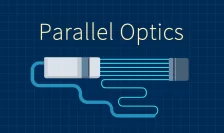
Learn what Parallel Optics is, how it enables high-speed data transmission and how LINK-PP QSFP28 SR4 and 200/400/800G transceiver modules support this technology.
Discover how Multicore Fiber (MCF) and Space-Division Multiplexing (SDM) are solving the bandwidth crisis. Learn about MCF applications and how LINK-PP's optical transceivers harness its power.
Discover IEEE 802.3ae: the foundation of 10 Gigabit Ethernet. Learn its standards, physical layers, and how LINK-PP 10G SFP+ modules ensure compliance.
Discover how microcontroller units (MCUs) support optical transceivers by enabling real-time monitoring, diagnostics-enabled modules (DOM), and precise laser control. Explore their essential role in LINK-PP modules for improved reliability.
Explore the critical challenges of optical module housings in the 400G/800G era: heat management, material limits, signal integrity, and how innovation tackles them.
Discover the role of optical module housings in data centers & 5G. Learn about materials like ceramics & alloys, thermal challenges, and explore Link-PP's optical transceivers.
Discover how optical modules power backbone networks: high-speed data, reliability, LINK-PP advantages, and procurement tips for data centers and carriers.
Turns ratio in LAN transformers defines the winding relationship, typically 1:1, ensuring signal integrity, voltage stability, and Ethernet compliance.
Explore what Thermal Interface Material (TIM) is, its key types, and why it matters in electronics and optical transceivers. Learn how TIM improves heat transfer, boosts device reliability, and supports LINK-PP modules—all explained clearly for better SEO and reader value.
Time Division Multiple Access allows multiple users to share one channel by assigning time slots, ensuring clear calls and efficient data in modern networks.
Discover how TSN (Time-Sensitive Networking) brings deterministic, low-latency, and reliable data delivery to Industry 4.0 and automotive Ethernet networks.
Learn what a TPU-Tensor Processing Unit is, how Google’s AI accelerator works, key TPU generations, TPU vs GPU, and its role in efficient large-scale machine learning.
SMT, or Surface Mount Technology, is a method for mounting electronic components directly onto PCB surfaces, enabling compact designs and efficient manufacturing.
10GBASE-LRM Industrial Transceiver Supports 10.3Gbps, 220m MMF reach, industrial temperature (-40~85°C), and full compatibility with Cisco, Arista, Dell, H3C.
Discover the LQ‑SW40‑SR4C 40GBASE‑SR module: high-speed, low-power, QSFP+ optics for multimode fibre networks. Perfect for data centres and network upgrades.
Learn what hyperconverged infrastructure HCI is, how it compares with virtualization and dHCI, and when Nutanix, Sangfor, or SFP-based designs fit best.
A complete technical guide to SFP-10GLR-31 transceivers covering 10GBASE-LR specifications, wavelength, fiber compatibility, switch support, and real deployment scenarios.