Blog
Blog Type
Product
Topic
Blog Type
Product
Topic
Knowledge Center
Industry
Product
Product
Glossary
Category
Showing results for: "What is"
Topics
171
A Virtual Private Network (VPN) secures online communication by encrypting data and masking IP addresses. Learn how VPNs work, their benefits, and why businesses rely on them for safe remote access and private browsing.
Dispersion compensation in optical systems corrects chromatic dispersion, ensuring clear, accurate signals in fiber optic communication and imaging applications.
Central Management Server streamlines server management, enabling secure, centralized control, updates, and monitoring for multiple systems in one place.
Electromagnetic interference (EMI) disrupts electronic devices by introducing unwanted electromagnetic energy, causing malfunctions and performance issues.
EMC Electromagnetic Compatibility ensures devices work safely and reliably in shared environments by minimizing interference and meeting compliance standards.
An Erbium-Doped Fiber Amplifier boosts optical signals in fiber networks, enabling long-distance communication with minimal loss and high efficiency.
Extinction ratio measures signal clarity in optical systems, impacting data reliability and error rates. High extinction ratio ensures accurate transmission.
Frequency-Division Multiplexing enables multiple signals to travel on one channel, ensuring clear, efficient communication for phones, TV, and internet.
FSK Modulation transmits digital data by shifting signal frequency for each bit, offering reliable communication even in noisy environments.
Fibre Channel over Ethernet (FCoE) enables Fibre Channel storage traffic to run on Ethernet networks, streamlining data center connectivity and reducing costs.
59
Discover SONET and SDH, the backbone technologies for high-speed fiber-optic communications. Learn about their standards, applications, and differences to enhance your network infrastructure knowledge.
Explore PIN and APD photodiode technologies, their concept, working principles, key difference, and applications in optical communication
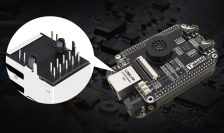
Understand the difference between RJ11 and RJ45 connectors, including their size, pin configuration, and uses in telecommunication and networking.
A BiDi transceiver uses WDM technology to send and receive data over one fiber, reducing costs, simplifying networks, and enhancing efficiency.
SFP and SFP+ transceivers differ in speed, compatibility, and use. SFP supports up to 1Gbps, while SFP+ handles up to 10Gbps for faster networks.
Discover the types, features, and benefits of PON modules, including OLT, ONU, and ONT devices, transmission protocols, and scalability for fiber networks.
CWDM vs DWDM: Cost-effective 8-channel metro optics vs high-density 96+ channel long-haul systems. Choose LINK-PP optical transceivers for both WDM solutions.
A switch is a network device that connects devices in a LAN, sending data only to the intended device for efficient, secure, and fast communication.
5G fronthaul links radio and processing units, enabling high-speed, low-latency data transfer essential for reliable and efficient 5G communication.
5G backhaul links cell sites to core networks, enabling high-speed, low-latency 5G services. Strong backhaul is vital for 2025’s data and device growth.
100
Understand what CRC is, how cyclic redundancy check errors happen, how to fix them, and why CRC matters in networking, storage, and SFP modules.
Learn what FCoE Fibre Channel over Ethernet is, how it works, and how it relates to optical modules, DCB, and high-performance data center networking.
The TOSA is a critical component in optical transceivers, converting electrical signals into optical signals for high-speed fiber optic communication.
Through-Hole Technology (THT) involves inserting component leads into PCB holes and soldering them, ensuring durable connections for high-reliability applications.
Through‑Hole Reflow Soldering enables simultaneous soldering of through-hole and surface-mount components in a single efficient reflow process.
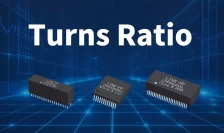
Turns ratio in LAN transformers defines the winding relationship, typically 1:1, ensuring signal integrity, voltage stability, and Ethernet compliance.
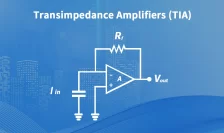
Transimpedance Amplifiers (TIAs) convert sensor current to voltage using an op-amp and feedback resistor, enabling accurate signal measurement.
Discover how TSN (Time-Sensitive Networking) brings deterministic, low-latency, and reliable data delivery to Industry 4.0 and automotive Ethernet networks.
What is SWDM? SWDM is a fiber technology using four short wavelengths to boost data rates and efficiency in multimode fiber networks.
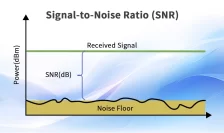
SNR, or signal-to-noise ratio, measures signal strength versus noise. High SNR means clearer audio, images, and data for better overall signal quality.
12
Learn what hyperconverged infrastructure HCI is, how it compares with virtualization and dHCI, and when Nutanix, Sangfor, or SFP-based designs fit best.
ODN in PON networks connects OLTs to ONUs, ensuring efficient optical signal transmission, scalability, and cost-effective high-speed connectivity.
Discover what data bandwidth means, how it affects devices, and why it matters in digital communication. Learn how LINK-PP supports high-speed data transfer.
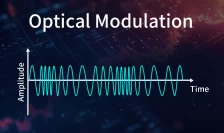
Optical modulation changes light properties to encode data, enabling high-speed, reliable transmission in fiber optic communication systems.
Optical transceiver modules convert electrical signals to light, enabling high-speed data transmission in fiber optic networks for modern communication.
Spine-Leaf Architecture in optical networks enables scalable, non-blocking connectivity and high performance for modern data centers.
Learn what SFP 10 Gbps (SFP+) is, how it compares to Ethernet, and how to choose the right 10G module. Includes real-world engineer insights.
Discover what a 1G multimode SFP is, how 1000BASE-SX works, and when to use short range fiber modules for reliable Gigabit Ethernet connections.
Learn what LX SFP (1000BASE-LX) modules are, how they differ from LR/LH/SX, and practical tips for compatibility, multimode use, and real-world deployment.
Explain what a 100km SFP transceiver is, how ER and ZR differ, required wavelength, optical budget calculation, and whether amplification is needed for long-haul fiber links.
Subscribe to LINK-PP
newsletter
Don’t miss anything. Get all the latest posts delivered straight to your inbox.

Video
01:11
Global Delivery Service | LINK-PP
Jun 26, 2024
- 1.2k
- 888