Welcome to the LINK-PP Community
More Posts
822
The TOSA is a critical component in optical transceivers, converting electrical signals into optical signals for high-speed fiber optic communication.
Through‑Hole Reflow Soldering enables simultaneous soldering of through-hole and surface-mount components in a single efficient reflow process.
What are SFP ports on a switch? Learn how SFP ports support fiber and Ethernet connections, how they compare with RJ45 and SFP+, and which module you need.
Learn what an SFP link is, why it fails, and how to fix compatibility, cabling, and link-flap issues with practical checks and clear steps.
MSA standardize optical transceiver designs, ensuring compatibility, reducing costs, and driving innovation across networking equipment.
Optical transceivers in UAVs enable high-speed, secure, and low-latency drone communication for real-time video, telemetry, and mission-critical data.
Explore the technology behind 400 G QSFP‑DD transceivers, including form factor, modulation, optical lanes, and thermal design.
Understand hot‑pluggable optical modules insertion cycle limits, and learn care tips—including ESD-safe handling, dust prevention, and heat management.
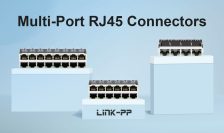
Explore multi‑port RJ45 connectors (1×N, 2×N). Shielded/unshielded options, LED or non‑LED, RoHS‑compliant — perfect for switches & embedded systems.
Understand what CRC is, how cyclic redundancy check errors happen, how to fix them, and why CRC matters in networking, storage, and SFP modules.
498
AWS (Amazon Web Services) powers global cloud computing with scalable services and high-speed data center networks. Learn AWS basics, architecture, and how optical transceivers support AWS connectivity.
Learn what EoR (End-of-Row) switches are, how the architecture works, its pros and cons, EoR vs ToR differences, deployment best practices, and recommended optical modules.
Discover what a MoR switch (Middle-of-Rack switch) is, how MoR compares to ToR/EoR, and which SFP+/SFP28/QSFP modules work best — a practical guide for datacenter design.
Learn what a ToR (Top-of-Rack) switch is, how ToR architecture works, and why it’s the preferred networking model in modern data centers. Includes benefits, use cases, and compatible optical transceiver solutions from LINK-PP.
WLAN covers all wireless local area networks, while Wi-Fi is a specific WLAN type using set standards for fast, reliable connections.
HTTP vs HTTPS: HTTPS encrypts data for secure transmission, while HTTP leaves information exposed. Choose HTTPS for privacy, trust, and compliance.
Compare 100G LR4, CWDM4, and PSM4 to find the best 100G transceiver for your network based on distance, cost, and cabling requirements.
Discover what a backplane is, how backplane channels support high-speed 40G/100G Ethernet, key standards, and design challenges. Learn how LINK-PP RJ45 connectors enhance backplane performance.
Learn the IEEE 802.3bj 100G Ethernet standard for backplane and copper cable interconnects. Explore PAM4, FEC, KP4/KR4/CR4 PHYs, and how LINK-PP modules support high-speed networks.
VLAN vs SVI explained: VLAN segments networks at Layer 2, while SVI enables inter-VLAN routing at Layer 3 for communication between VLANs.
216
A PLC-Programmable Logic Controller automates machines and processes, offering reliable, flexible control for efficient industrial automation systems.
Explore what Supervisory Control and Data Acquisition (SCADA) systems are, how they work, and their vital role in industrial automation and smart infrastructure.
A VLAN segments a network at the data link layer, improving security, performance, and management by isolating devices within virtual groups.
File Transfer Protocol (FTP) enables fast file transfers between computers on a network, supporting various file types but lacking built-in security.
SSH File Transfer Protocol (SFTP) offers secure file transfer protocol features, using encryption and authentication to protect data during file transfers.
Secure Shell (SSH) enables encrypted remote access and secure file transfer, protecting data with strong authentication and robust encryption methods.
Virtual Extensible LAN enables scalable, secure, and flexible network virtualization, supporting millions of segments for modern data center needs.
Learn what an Intrusion Prevention System (IPS) is, how it works, key types, and deployment best practices. Enhance your IPS network with LINK-PP Ethernet components.
FBT splitter offers a cost-effective way to split optical signals in fiber networks, ideal for small setups needing simple, customizable signal distribution.
Learn how NAT (Network Address Translation) works, its types, benefits, limitations, and best practices for IPv6 and enterprise deployments.
108
Complete guide to long distance transceivers covering 10km to 120km optics, 1310nm vs 1550nm, ER/ZR modules, link budget calculation, and deployment best practices.
Authoritative guide to LR SFP modules (10GBASE-LR): technical specs, typical 10 km reach, fiber requirements, vendor compatibility, procurement checklist and deployment best practices.
This guide explains SR SFP modules, including wavelength, fiber requirements, typical reach, compatibility issues, and selection tips for short-range optical networking.
Professional guide to 10GbE SFP+ modules covering types, pricing, compatibility, power, and supplier selection for reliable enterprise and data center deployments.
QSFP28 vs. QSFP-DD explained for engineers. Compare electrical lanes, speed, power, compatibility, and deployment scenarios to select the right 100G or 400G optical module.
Compare Cisco SFP-10G-T-X with compatible 10GBASE-T SFP+ modules. Learn differences in power, distance, compatibility, and when a third-party option makes sense.
Solve data center bottlenecks with 40GBASE-SR4 Optical Modules for high bandwidth, low latency, and scalable, future-proof network performance.
1000BASE-SX SFP Optical Transceiver specs: 1.25Gbps, 850nm, up to 550m on multimode fiber, LC connector, DOM, and broad device compatibility explained.
Unlock flexible, high-density 100G/112G connectivity. The LQ-LW112-LR4C is a dual-rate QSFP28 10km transceiver supporting both 100GBASE-LR4 and 112GBASE-OTU4 over SMF.

Spine-Leaf Architecture in optical networks enables scalable, non-blocking connectivity and high performance for modern data centers.
Subscribe to LINK-PP
newsletter
Don’t miss anything. Get all the latest posts delivered straight to your inbox.
Video
01:11
Global Delivery Service | LINK-PP
Jun 26, 2024
- 1.2k
- 888