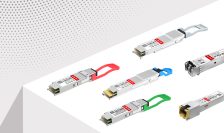
Explore point-to-multipoint (P2MP) network architecture, working principle, advantages, and applications. Learn how LINK-PP optical transceivers support P2MP deployments.
Global Positioning System (GPS) uses satellites to provide accurate real-time location, navigation, and tracking for personal, business, and safety needs.
What is CMOS? Learn the fundamentals of Complementary Metal-Oxide-Semiconductor technology, its working principle, key advantages, and its integration with silicon photonics and optical transceivers.
Internet Control Message Protocol (ICMP) helps diagnose network issues by sending error and status messages between devices for reliable communication.
Discover the differences between silicon photonic modulators and traditional optical modulators, their working principles, advantages, and role in next-generation optical transceivers.
Explore how lasers, modulators, and photodiodes form the core of optical transceivers, enabling high-speed, low-latency data transmission across global networks.
Compare Network Time Protocol (NTP) and Precision Time Protocol (PTP) to choose the right time sync solution for your network’s accuracy and hardware needs.
Explore how 6G networks challenge optical transceivers with ultra-high bandwidth demands, and discover advanced solutions like CPO, silicon photonics, and LINK-PP 6G-ready optical modules.
A clear, authoritative guide to 6G networks: what 6G is, IMT-2030 timeline, core technologies (THz, ISAC, AI-native networks), key use cases, and implications for optical modules.
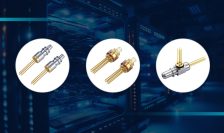
TOSA, ROSA, and BOSA are key components in optical transceivers, enabling high-speed data transmission, reception, and bidirectional communication in modern networks.
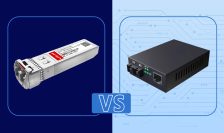
Compare optical transceivers and fiber media converters to understand their roles, advantages, and use cases in modern networking and data transmission.
Understand the operating temperature range of optical transceivers, including commercial (0°C-70°C), extended (-20°C-85°C), and industrial (-40°C-85°C) grades.
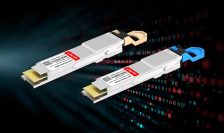
QSFP-DD Optical Transceivers deliver up to 800Gbps speeds, offering high bandwidth, energy efficiency, and compatibility for modern networks and data centers.
Compare SFP, SFP+, SFP28, QSFP+, and QSFP28 optical transceivers. Learn how form factors affect speed, compatibility, and performance in modern networks.
What Frame Check Sequence (FCS) means, how CRC-32 detects corrupted Ethernet frames, and why FCS errors are commonly associated with cable faults, fiber issues, or optical transceiver problems.
Discover how optical cross‑connect (OXC) enables all‑optical switching in DWDM/OTN networks, with LINK‑PP SFP modules ensuring seamless integration and superior performance.
Learn what Dispersion Compensation Fiber (DCF) is, how it reduces chromatic dispersion, where it is used, and why it matters in modern optical networks.
Learn what OEO means in optical communication, how optical-electrical-optical regeneration works, and when it is used in DWDM networks and optical links. Keywords:
Discover the LQ‑SW40‑SR4C 40GBASE‑SR module: high-speed, low-power, QSFP+ optics for multimode fibre networks. Perfect for data centres and network upgrades.
Learn what hyperconverged infrastructure HCI is, how it compares with virtualization and dHCI, and when Nutanix, Sangfor, or SFP-based designs fit best.
Learn how compatible transceivers work and how to ensure switch compatibility. Avoid SFP errors, vendor locks, and choose the right module confidently.