


Blog
Blog Type
Product
Topic
Blog Type
Product
Topic
Knowledge Center
Industry
Product
Product
Glossary
Category
Learn Any Topic in 5 Minutes: Your Ultimate Glossary
Search for topics that interest you
216
articles
216








What is LWDM? LWDM is a LAN WDM technology using multiple wavelengths to boost bandwidth and efficiency in local area networks and data centers.
Insertion loss in RJ45 connectors weakens signal strength, impacting network reliability. Learn how to minimize insertion loss for optimal performance.
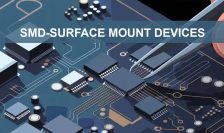
A Surface-Mount Device (SMD) is a compact electronic component mounted directly on a PCB, enabling smaller, faster, and more efficient modern electronics.
Learn what a DFB laser (Distributed Feedback Laser) is, its working principle, structure, and key differences from FP and VCSEL lasers.
An Erbium-Doped Fiber Amplifier boosts optical signals in fiber networks, enabling long-distance communication with minimal loss and high efficiency.
CPRI (Common Public Radio Interface) connects baseband units to remote radio units, enabling high-speed, low-latency communication in wireless networks.
EMC Electromagnetic Compatibility ensures devices work safely and reliably in shared environments by minimizing interference and meeting compliance standards.
Electromagnetic interference (EMI) disrupts electronic devices by introducing unwanted electromagnetic energy, causing malfunctions and performance issues.
Through-Hole Technology (THT) involves inserting component leads into PCB holes and soldering them, ensuring durable connections for high-reliability applications.
SMT, or Surface Mount Technology, is a method for mounting electronic components directly onto PCB surfaces, enabling compact designs and efficient manufacturing.
Subscribe to LINK-PP
newsletter
Don’t miss anything. Get all the latest posts delivered straight to your inbox.
All Topics
14
17
8
18
14
0
0
13
12
11
25
11
18
12
0
0
0
167
89
55
30
10
31
28
21
14